 6 min read
ALLERGY SYMPTOMS & TREATMENT: SEASONAL, FOOD & SKIN ALLERGIES, TESTING, MEDICATIONS & WHEN TO GET HELP
Your eyes are watering, your nose will not stop running, and you have been sneezing all morning. Or maybe you broke out in hives after eating at a new restaurant. Or perhaps your child developed a rash after playing in the grass.
Allergies affect more than 50 million Americans annually, making them the sixth leading cause of chronic illness in the United States, according to the Asthma and Allergy Foundation of America. From seasonal pollen to food sensitivities to skin reactions, allergies range from a mild annoyance to a medical emergency.
This guide explains the different types of allergies, how to recognize symptoms, what treatment options are available, and when you need same-day medical care.
Seasonal Allergies (Allergic Rhinitis)
Common Triggers
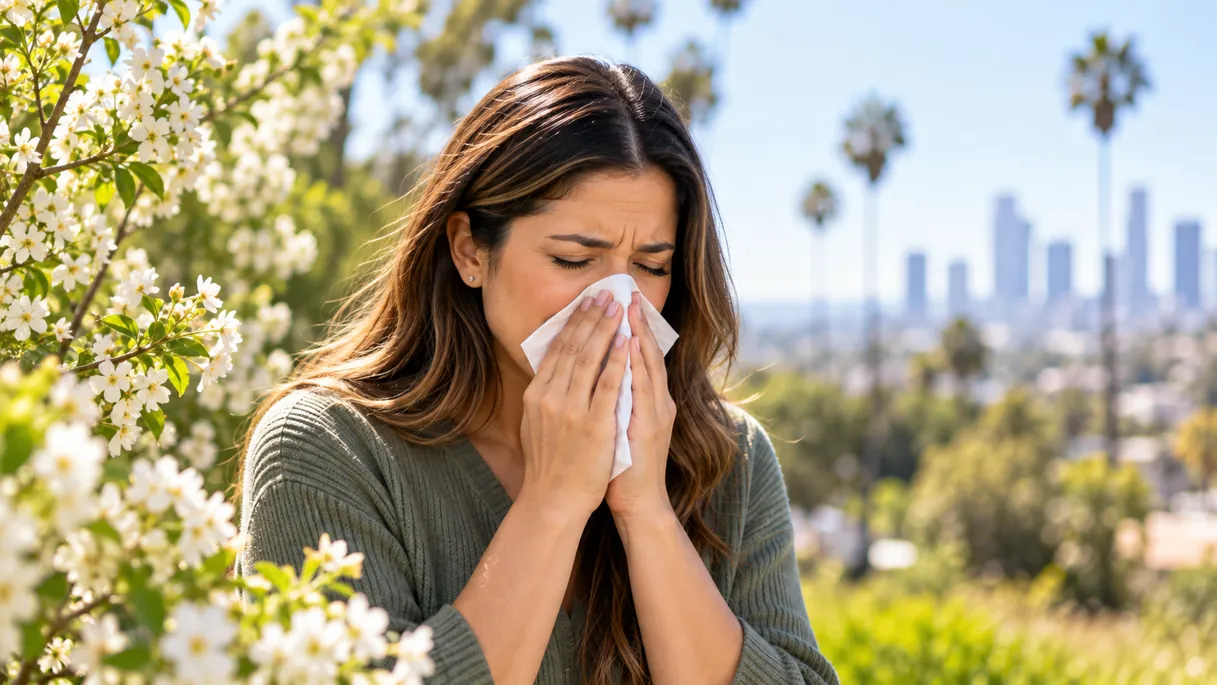
In Los Angeles, seasonal allergies can occur year-round due to the mild climate. Common triggers include tree pollen (peaks in late winter through spring), grass pollen (peaks in late spring through summer), weed pollen including ragweed (peaks in fall), mold spores (year-round in coastal and humid areas), and dust mites (year-round, especially indoors).
Symptoms
Seasonal allergy symptoms include sneezing, congestion, runny nose with clear discharge, itchy and watery eyes, itchy throat or ears, post-nasal drip, fatigue, and sinus pressure. These symptoms often mimic a cold, but allergies typically lack fever and body aches and tend to persist for weeks rather than resolving in 7 to 10 days.
Treatment Options
Over-the-counter antihistamines like cetirizine (Zyrtec), loratadine (Claritin), or fexofenadine (Allegra) provide relief for most people. Nasal steroid sprays like fluticasone (Flonase) reduce inflammation and congestion. Eye drops can address itchy, watery eyes. For severe symptoms that do not respond to OTC medications, a provider at Mederi Urgent Care can prescribe stronger medications or recommend allergy testing referral.
Food Allergies
Common Food Allergens
The eight major food allergens account for about 90% of all food allergy reactions: milk, eggs, peanuts, tree nuts, wheat, soy, fish, and shellfish. Sesame was added as the ninth major allergen by the FDA in 2023.
Symptoms
Food allergy reactions can range from mild to life-threatening. Mild to moderate symptoms include hives or skin rash, tingling or itching in the mouth, swelling of the lips, tongue, or face, stomach cramps, nausea, or diarrhea. Severe symptoms (anaphylaxis) include throat tightening or swelling, difficulty breathing or wheezing, rapid pulse, dizziness or loss of consciousness, and a sudden drop in blood pressure.
When Food Allergies Need Urgent Care
Mild food allergy reactions with hives or stomach discomfort can be treated at urgent care with antihistamines and observation. Any signs of anaphylaxis require immediate injection of epinephrine (EpiPen) and a 911 call. After an anaphylactic reaction is treated, patients should be monitored in a medical setting as symptoms can return (biphasic reaction).
Skin Allergies and Contact Dermatitis
Skin allergies cause rashes, itching, redness, and swelling when your skin contacts an allergen or irritant. Common triggers include poison ivy, poison oak, and poison sumac, nickel (found in jewelry, belt buckles, and zippers), latex, fragrances and preservatives in soaps and lotions, and certain medications applied to the skin.
Treatment includes removing the irritant, washing the area thoroughly, applying hydrocortisone cream, and taking oral antihistamines. For widespread or severe reactions, a provider can prescribe stronger topical steroids or oral steroids. If a rash shows signs of infection (increasing redness, warmth, pus, or fever), seek same-day treatment for proper evaluation and possible antibiotics.
Allergy Testing: When and How
If you experience recurring allergy symptoms and want to identify your specific triggers, allergy testing provides answers. Blood testing (specific IgE testing) can be ordered at urgent care or through lab services and measures antibody levels to specific allergens. Results typically take a few days. Skin prick testing is performed by an allergist and involves exposing the skin to small amounts of potential allergens. This is typically done through specialist referral.
Your urgent care provider can help determine whether allergy testing is appropriate, order initial blood work, and refer you to an allergist for comprehensive testing if needed.
Managing Allergies Long-Term
Effective allergy management combines trigger avoidance with medication. Monitor pollen counts daily (available through weather apps and websites) and limit outdoor activity on high-count days. Keep windows closed during peak pollen seasons. Shower and change clothes after spending time outdoors. Use HEPA filters in your home. Wash bedding weekly in hot water to reduce dust mites. Take allergy medication consistently during your allergy season rather than waiting for symptoms to become severe.
For patients with ongoing allergy issues, establishing a primary care relationship provides continuity of care and allows your provider to adjust your treatment plan over time.
Frequently Asked Questions
Can urgent care treat allergic reactions?
Yes. Urgent care can treat mild to moderate allergic reactions with antihistamines, steroids, and other medications. Severe reactions (anaphylaxis) require emergency care. If you are unsure about the severity, visiting urgent care is a safe starting point.
Do allergies get worse with age?
Allergies can develop, worsen, or improve at any age. Adults can develop new allergies they did not have as children. Environmental changes, relocating to a new area, and hormonal shifts can all affect allergy severity.
What is the difference between a food allergy and food intolerance?
A food allergy involves an immune system response and can cause anaphylaxis. Food intolerance (like lactose intolerance) involves the digestive system and causes discomfort like bloating and diarrhea but is not life-threatening.
Can children outgrow allergies?
Some children outgrow allergies to milk, eggs, wheat, and soy. Allergies to peanuts, tree nuts, fish, and shellfish are more likely to persist into adulthood. Regular follow-up with a provider helps monitor changes.
Get Allergy Relief Without the Wait
Whether your allergies are seasonal, food-related, or skin-based, you do not need to suffer through symptoms. Walk-in treatment at urgent care gets you evaluated and started on the right medication the same day.
Mederi Urgent Care treats allergic reactions and allergy symptoms at four Los Angeles locations, seven days a week. Call 213-442-1890 or visit mederiurgentcare.com to book your visit.

You Might Also Enjoy...
Allergy Symptoms & Treatment: Seasonal, Food & Skin Allergies, Testing, Medications & When to Get Help
Dealing with allergy symptoms? Learn about seasonal, food, and skin allergies, available testing, medications, and when to seek same-day treatment at Mederi Urgent Care LA.

Sports Physical & School Physical Near Me: Requirements, What's Checked, Cost & Walk-In Availability
Need a sports or school physical near you? Learn what's checked, state requirements, costs, and how to get a walk-in physical at Mederi Urgent Care in Los Angeles.