 5 min read
DEHYDRATION SYMPTOMS & TREATMENT: WARNING SIGNS, CAUSES, WHEN TO GET IV FLUIDS & RECOVERY TIPS
Dehydration happens faster than most people expect. A day in the Los Angeles sun, a stomach bug that keeps you up all night, a workout where you forgot your water bottle, or a busy day where you simply did not drink enough. By the time you feel thirsty, your body is already mildly dehydrated.
The National Academies of Sciences, Engineering, and Medicine recommends about 3.7 liters of daily fluid intake for men and 2.7 liters for women from all beverages and food combined. Falling short regularly or losing fluids rapidly through illness, exercise, or heat can lead to symptoms that range from fatigue and headache to medical emergencies.
This guide explains how to recognize dehydration at every stage, what causes it, when IV fluids become necessary, and how to recover quickly and safely.
Recognizing Dehydration Symptoms by Severity
Mild Dehydration
Thirst, dry mouth, slightly dark yellow urine, mild headache, and feeling tired or sluggish. At this stage, drinking water or an electrolyte beverage is usually sufficient to recover. Most people experience mild dehydration regularly without realizing it.
Moderate Dehydration
Decreased urination, darker urine, dry skin that is slow to bounce back when pinched (reduced skin turgor), dizziness when standing up, muscle cramps, and increased heart rate. Moderate dehydration requires intentional rehydration with electrolyte-rich fluids. If oral intake is difficult due to nausea or vomiting, medical treatment may be needed.
Severe Dehydration
Very little or no urination, extremely dark urine, sunken eyes, rapid heartbeat, low blood pressure, confusion or irritability, fainting, and in extreme cases, seizures. Severe dehydration is a medical emergency that requires IV fluid replacement. Do not try to manage severe dehydration at home.
Dehydration in Children: Special Warning Signs
Children dehydrate faster than adults due to their smaller body size and higher metabolic rate. Watch for no tears when crying, dry mouth and tongue, no wet diapers for 3 or more hours in infants, sunken fontanelle (soft spot) on an infant's head, excessive sleepiness or irritability, and sunken eyes or cheeks.
If your child shows signs of moderate to severe dehydration, visit Mederi Urgent Care immediately. IV hydration therapy can restore fluid balance quickly when a child cannot keep liquids down.
Common Causes of Dehydration
Illness is the most common trigger. Vomiting, diarrhea, and fever cause rapid fluid loss. A single day of stomach flu can deplete your body's fluid reserves significantly. Heat and sun exposure, especially during Los Angeles summers, increases fluid loss through sweating. Intense physical activity without adequate hydration, particularly outdoor exercise, leads to dehydration through sweat loss. Certain medications like diuretics, laxatives, and some blood pressure medications increase urination and can contribute to fluid loss. Alcohol consumption causes dehydration because alcohol is a diuretic that increases urine output. Chronic conditions like diabetes, kidney disease, and adrenal insufficiency can affect fluid balance.
When to Get IV Fluids
Oral rehydration is effective for mild to moderate dehydration when you can keep fluids down. IV fluids become necessary when you cannot keep liquids down due to persistent vomiting, symptoms of moderate to severe dehydration are present, you need rapid rehydration (severe dehydration, heat exhaustion), a child shows signs of dehydration and refuses to drink, or you are recovering from an illness that caused significant fluid loss.
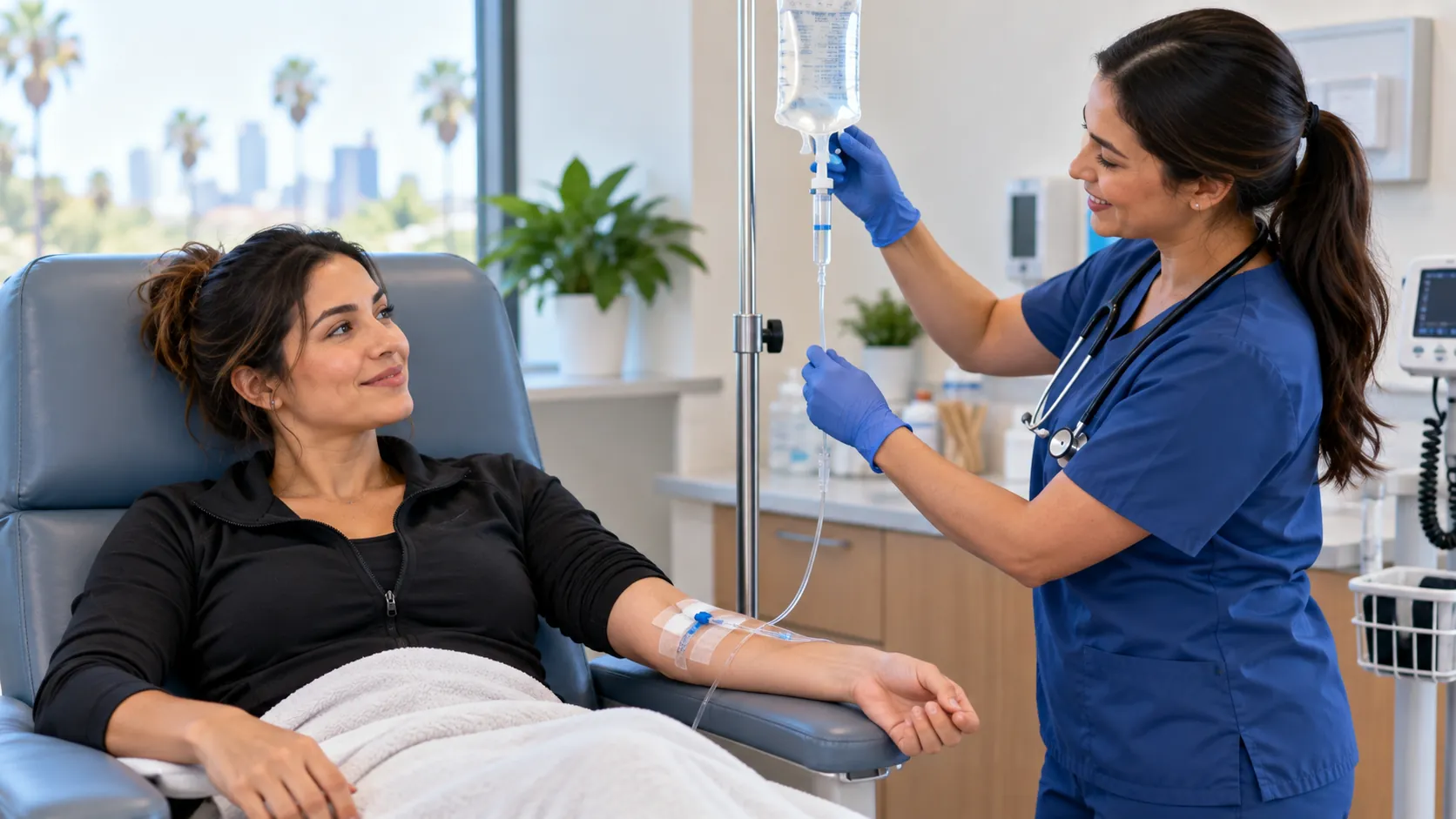
IV hydration delivers saline, electrolytes, and sometimes vitamins directly into your bloodstream, bypassing the digestive system entirely. Rehydration through IV typically takes 30 to 60 minutes and provides immediate relief. IV hydration therapy at Mederi Urgent Care is available seven days a week at all locations.
Recovery Tips for Dehydration
For mild to moderate dehydration you are managing at home, sip fluids slowly and steadily rather than gulping large amounts at once. Choose electrolyte drinks, coconut water, broth, or oral rehydration solutions (like Pedialyte for children) rather than plain water alone, as electrolytes help your body absorb and retain fluids. Avoid caffeine and alcohol, which increase urination. Eat water-rich foods like watermelon, cucumber, oranges, and soup. Rest in a cool environment. Monitor urine color: pale yellow indicates adequate hydration.
If your symptoms do not improve within a few hours of active rehydration, or if they worsen, seek medical care. A provider can evaluate your hydration status with a physical exam and lab work and determine whether IV fluids are needed.
Frequently Asked Questions
How quickly can dehydration become dangerous?
In severe cases, dehydration can become dangerous within hours, especially in young children, elderly adults, and people with chronic illnesses. Infants can become severely dehydrated within a single day of vomiting and diarrhea.
Can I get IV fluids at urgent care without a prescription?
Yes. At Mederi Urgent Care, a provider evaluates your condition and administers IV fluids during your visit if clinically appropriate. No separate prescription is needed.
Is dehydration the same as heat exhaustion?
Dehydration is one component of heat exhaustion, but heat exhaustion also involves overheating. Symptoms of heat exhaustion include heavy sweating, weakness, nausea, and dizziness. If untreated, heat exhaustion can progress to heat stroke, which is a medical emergency.
How much water should I drink daily to prevent dehydration?
General recommendations are about 3.7 liters for men and 2.7 liters for women from all sources. Increase intake during hot weather, exercise, illness, and when taking medications that affect hydration.
Do Not Ignore Dehydration Symptoms
Dehydration affects your energy, cognitive function, and organ systems. When oral fluids are not enough, IV hydration provides fast, effective recovery.
Mederi Urgent Care offers IV hydration therapy and dehydration treatment at four Los Angeles locations, seven days a week. Walk in or call 213-442-1890. Visit mederiurgentcare.com to schedule.

You Might Also Enjoy...

Allergy Symptoms & Treatment: Seasonal, Food & Skin Allergies, Testing, Medications & When to Get Help
Dealing with allergy symptoms? Learn about seasonal, food, and skin allergies, available testing, medications, and when to seek same-day treatment at Mederi Urgent Care LA.

Sports Physical & School Physical Near Me: Requirements, What's Checked, Cost & Walk-In Availability
Need a sports or school physical near you? Learn what's checked, state requirements, costs, and how to get a walk-in physical at Mederi Urgent Care in Los Angeles.