 6 min read
AFTER-HOURS MEDICAL CARE: WHERE TO GO FOR ILLNESS, INJURIES, TESTING & IMMEDIATE TREATMENT
It is 7 PM on a Saturday. Your child spikes a fever of 103. Your partner slips in the kitchen and cannot put weight on their ankle. You notice symptoms that are worrying you, but your regular doctor's office closed hours ago and will not reopen until Monday.
These situations happen constantly. Illness and injury do not follow business hours, and knowing where to go when your regular doctor is unavailable can save you unnecessary ER visits, long waits, and high medical bills.
This guide explains your after-hours care options, when to choose each one, and how to get the treatment you need without overpaying or waiting longer than necessary.
Your After-Hours Care Options
Urgent Care Clinics
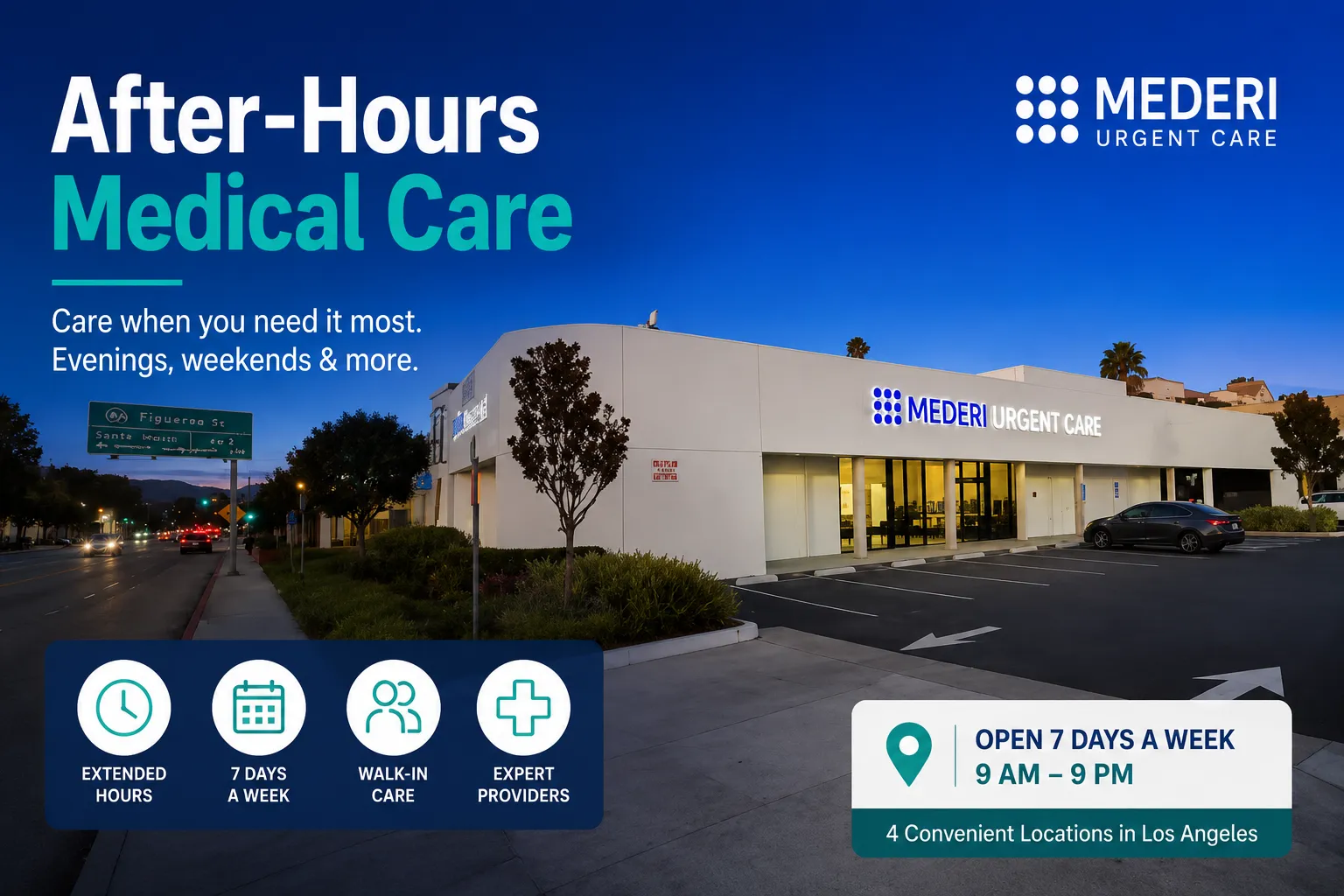
Urgent care clinics are the most practical option for most after-hours medical needs. They are staffed by physicians, physician assistants, and nurse practitioners who can diagnose and treat a wide range of non-emergency conditions. Many urgent care clinics operate with extended hours, including evenings and weekends. Mederi Urgent Care, for example, is open seven days a week from 9 AM to 9 PM at four locations across Los Angeles. This means you have access to walk-in medical care during hours when most regular doctors' offices are closed, including evenings, Saturdays, and Sundays.
Emergency Rooms
Emergency rooms are open 24/7 and equipped to handle life-threatening conditions. They are the right choice for chest pain, stroke symptoms, severe allergic reactions, heavy bleeding, major trauma, and breathing emergencies. However, ER visits for non-emergency conditions result in long waits (often 2 to 4 hours or more) and significantly higher costs. The average ER visit costs over $2,000, compared to $150 to $300 at urgent care.
Telehealth Services
Virtual doctor visits have become widely available and can be accessed from your phone or computer at any hour. Telehealth works well for medication refills, simple rash evaluations, reviewing lab results, and follow-up consultations. However, telehealth has clear limitations: the provider cannot perform a physical exam, take your vitals, draw blood, run rapid tests, or take X-rays.
Nurse Hotlines
Many insurance plans offer 24/7 nurse advice lines. These can help you determine whether your symptoms require immediate attention or can safely wait until morning. They do not provide treatment but can guide your decision about where to seek care.
Conditions Commonly Treated After Hours
Urgent care clinics handle the same conditions after hours that they treat during the day. Common after-hours reasons for visits include fevers in children and adults, ear infections and sore throats, urinary tract infections, cuts needing stitches, sprains and suspected fractures, allergic reactions (mild to moderate), asthma flare-ups, stomach flu and dehydration, eye infections, skin infections and rashes, and insect bites requiring treatment.
On-site lab testing and X-ray services mean that diagnostic work can be performed during evening and weekend visits, not just during traditional business hours.
How to Decide: Urgent Care, ER, or Wait Until Morning?
Making the right call about where to go can feel stressful in the moment. Here is a practical framework:
Choose urgent care if you need medical attention today but your condition is not life-threatening. This covers most fevers, infections, minor injuries, and symptoms that have been developing over hours or days.
Go to the ER if you are experiencing chest pain, difficulty breathing, signs of stroke, severe head injury, uncontrollable bleeding, poisoning, or seizures. These conditions require emergency-level resources and 24/7 monitoring.
Wait until morning if your symptoms are mild, you have already taken appropriate over-the-counter remedies, and you are not getting worse. A mild headache, a minor cold that just started, or a small bruise can typically wait for a regular office visit. If you are unsure, calling a nurse hotline or urgent care clinic can help you decide.
After-Hours Care for Children
Pediatric concerns after hours are especially anxiety-inducing for parents. Children get sick fast, fevers spike at night, and ear infections seem to always hit on weekends.
Urgent care clinics that offer pediatric services can evaluate and treat children for most common childhood illnesses and injuries during evening and weekend hours. This includes fevers, ear infections, strep throat, minor injuries, dehydration, and allergic reactions.
Take your child to the ER if they are under 3 months old with a fever above 100.4 F, having difficulty breathing, showing signs of severe dehydration (no tears, no wet diapers for 6+ hours), experiencing a seizure, or if you suspect a serious head injury.
What to Bring to an After-Hours Visit
Being prepared for your visit helps the process go smoothly. Bring your insurance card and photo ID, a list of current medications, your child's vaccination records (if relevant), any relevant medical history (allergies, chronic conditions), and a clear description of when symptoms started and how they have progressed.
If you are visiting for an injury, note when and how it happened. For possible workplace injuries, bring your employer's workers' compensation information if available.
Frequently Asked Questions
Are after-hours urgent care visits more expensive?
Most urgent care clinics charge the same rates regardless of when you visit. Your copay and out-of-pocket costs are the same whether you walk in at 10 AM or 8 PM. This is different from emergency rooms, which may charge facility fees regardless of the time.
Can urgent care prescribe medications after hours?
Yes. Urgent care providers can prescribe the same medications during evening and weekend hours as during the day. Prescriptions are sent electronically to your preferred pharmacy. Many 24-hour pharmacies can fill prescriptions immediately.
What if my condition worsens after the urgent care clinic closes?
If your condition becomes severe after the clinic closes, go to the nearest emergency room. Urgent care visit notes are available to ER providers upon request to ensure continuity of care.
Do I need to call ahead before an after-hours urgent care visit?
Calling ahead is not required at most walk-in clinics. However, a quick call can confirm current wait times and ensure the clinic can handle your specific concern.
Do Not Wait Until Monday
When illness or injury strikes outside of regular business hours, you have options beyond the emergency room. After-hours urgent care provides the same quality diagnosis and treatment at a fraction of the cost, with shorter wait times and the convenience of walk-in access.
Mederi Urgent Care is open 9 AM to 9 PM, seven days a week, at four Los Angeles locations. Call 213-442-1890 or visit mederiurgentcare.com to find a location near you.

You Might Also Enjoy...

When to Take Your Child to Urgent Care: Fevers, Injuries, Ear Infections, Rashes & Warning Signs
Not sure if your child needs urgent care? Learn when to bring kids in for fevers, ear infections, injuries, rashes, and which symptoms require an ER visit instead.

Preventive Healthcare Services: Testing, Physicals, Early Diagnosis & Long-Term Health Benefits
Learn about preventive healthcare services including screenings, physicals, vaccinations, and early diagnosis. Protect your long-term health at Mederi Urgent Care in Los Angeles.