 15 min read
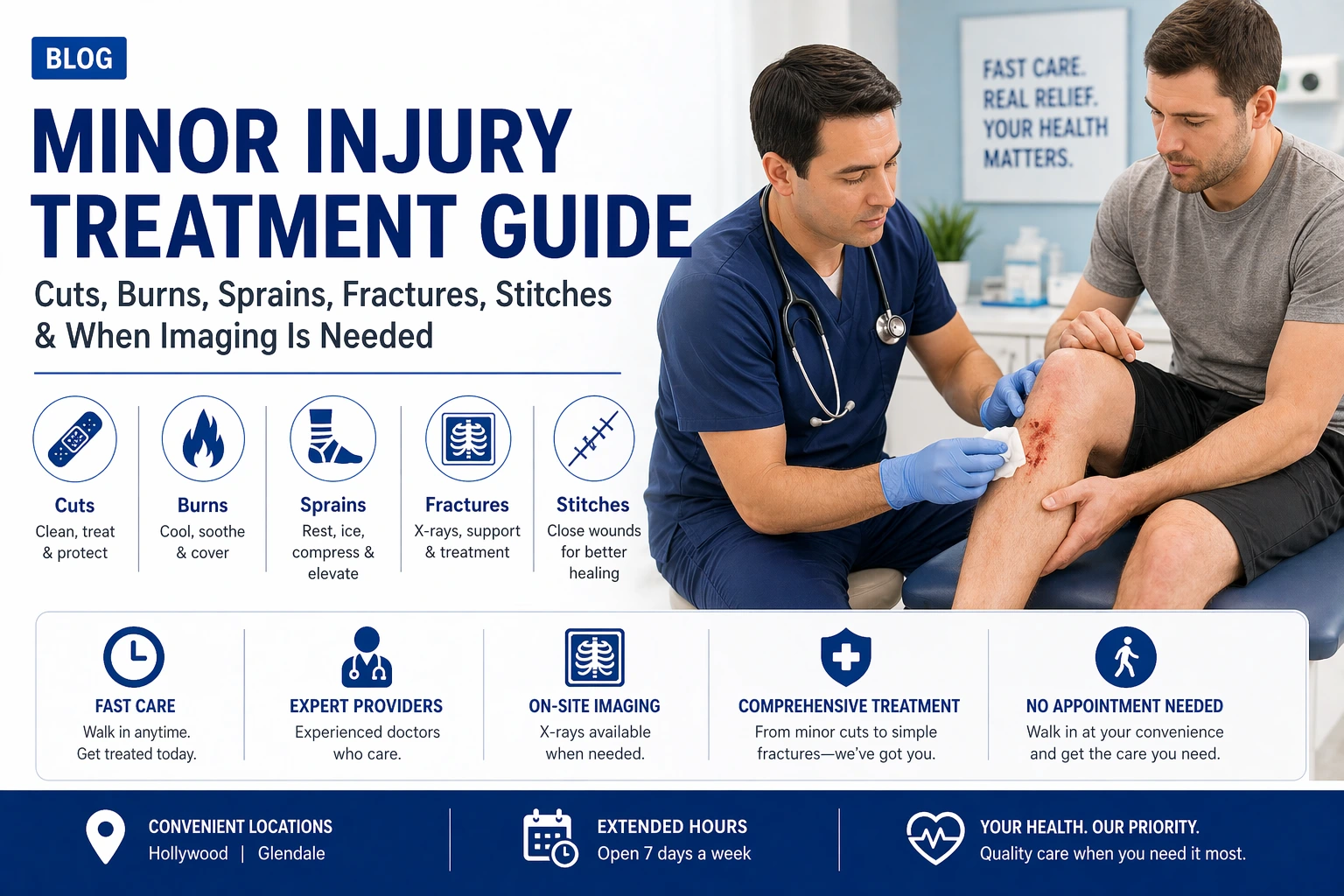
MINOR INJURY TREATMENT GUIDE: CUTS, BURNS, SPRAINS, FRACTURES, STITCHES & WHEN IMAGING IS NEEDED
You trip on the sidewalk and scrape your knee. You touch a hot pan and get burned. You miss a step and twist your ankle. These accidents happen to everyone. Most minor injuries heal on their own, but knowing how to treat them properly matters. Getting the right care quickly reduces pain, prevents infection, and helps you recover faster.
At Mederi Urgent Care, we treat minor injuries every day. This guide explains what counts as a minor injury, how to provide first aid at home, when you need medical attention, and what to expect when you come to our clinic. Whether you have a cut that might need stitches, a burn that is blistering, or a sprain that will not improve, we have the answers you need and the care you deserve.
What Counts as a Minor Injury?
A minor injury is trauma to your body that does not threaten your life or permanent function. These injuries are common and usually heal without leaving lasting damage. Common minor injuries include cuts, scrapes, small burns, sprains, strains, and simple fractures.
The key word is minor. If you are having severe pain, cannot move a limb, or the injury looks serious, go to an emergency room. Do not wait. But if you have a minor issue and want professional evaluation, Mederi Urgent Care offers fast walk-in care without the long waits of an emergency room.
Common Minor Injuries We Treat
Cuts and lacerations: Deep cuts, cuts that will not stop bleeding, or cuts with ragged edges may need stitches. Abrasions and scrapes: Road rash and sidewalk scrapes are painful but usually heal well with proper cleaning. Burns: First and second-degree burns (superficial and blistering burns) are typically minor if they cover a small area. Sprains: Overstretched or torn ligaments in ankles, wrists, or knees often swell and bruise but heal with proper rest. Strains: Muscle or tendon injuries from overuse or sudden movement cause pain and stiffness. Contusions: Bruises from impact bleeding under the skin cause pain, swelling, and discoloration. Simple fractures: Broken bones that are not displaced and do not break the skin can be treated in urgent care with proper immobilization.
First Aid for Minor Injuries at Home
Your first response to a minor injury sets the stage for good healing. Follow these first aid steps before coming to our clinic.
Cuts and Lacerations
Step 1: Stop the bleeding. Apply direct pressure with a clean cloth or gauze for 5 to 10 minutes. Do not remove the cloth to check on bleeding. Keep pressure on it. Step 2: Clean the wound. Once bleeding stops, rinse with cool running water. Gently remove dirt and debris. Use soap around the wound, but avoid getting it directly in the cut. Step 3: Apply an antibiotic. Use an over-the-counter antibiotic ointment like bacitracin or neomycin. This reduces infection risk. Step 4: Cover the wound. Use a sterile bandage or gauze pad. Change the dressing daily and keep the wound clean and dry. When to seek care: If bleeding does not stop after 10 minutes of pressure, if the cut is deep, if the edges are very gaping, if the cut is on your face or hand, or if you cannot see the bottom of the wound, come to our clinic. You may need stitches.
Burns
Step 1: Cool the burn. Remove any tight clothing unless it is stuck to the skin. Hold the burned area under cool (not cold) running water for 10 to 20 minutes. This reduces pain and prevents deeper damage. Step 2: Apply a burn cream. Use an over-the-counter burn gel or antibiotic ointment. Avoid ice and do not apply butter, grease, or other home remedies. Step 3: Cover gently. Use a sterile gauze bandage, not an adhesive bandage that will stick. Change the dressing as needed to keep it clean. When to seek care: If the burn is larger than 3 inches, is blistering heavily, is on your face, hand, joint, or genitals, or if the skin is white or charred, come in right away. Also seek care if you burned yourself on a chemical or electrical source.
Sprains and Strains
Step 1: Rest. Stop the activity that caused the injury. Continuing to use the injured joint or muscle makes it worse. Step 2: Ice. Apply an ice pack for 20 minutes, then remove it for 20 minutes. Repeat for the first 48 hours. Ice reduces swelling and pain. Step 3: Compress. Wrap the injured area with an elastic bandage. Make it snug but not so tight that you lose circulation. Loosen it if your fingers or toes tingle or turn blue. Step 4: Elevate. Keep the injured area raised above heart level if possible. This drains fluid from the swelling. When to seek care: If you cannot move the joint, cannot put weight on your leg, or the swelling and pain do not improve after 48 hours of home care, come to Mederi Urgent Care.
When Do Minor Injuries Need Medical Attention?
Not every scrape needs a doctor visit. But some injuries benefit from professional care. Use these guidelines to decide.
Signs You Should Get Care Now
Bleeding that does not stop after 10 minutes of direct pressure. A wound longer than one-quarter inch or deeper than one-eighth inch. Gaping or jagged edges that need stitches. Signs of infection: increasing redness, warmth, swelling, pus, or red streaks leading from the wound. A burn larger than three inches or blistering significantly. A burn on the face, hand, joint, foot, or genitals. Pain or swelling that worsens after 48 hours of home care. Inability to move a joint or put weight on a limb. Suspected broken bone with visible deformity or inability to use the limb.
Why Timely Care Matters
Getting minor injuries treated promptly prevents complications. Cuts need stitches within 6 to 8 hours to close properly. Untreated sprains can become chronic and unstable. Infections can spread and become serious. A visit to Mederi Urgent Care prevents these problems before they start.
Stitches: How to Know If You Need Them
Stitches close wounds and help them heal with minimal scarring. Not all cuts need stitches, but some do. Use these rules to decide.
When Stitches Are Necessary
Your cut needs stitches if one of these applies: The cut is deeper than one-eighth inch. The cut is longer than one-quarter inch. The edges are gaping open. The cut is on your face, hand, joint, foot, or chest (areas that move a lot or are visible). The cut is from a dirty or rusty object. The cut has been bleeding for more than 10 minutes with direct pressure.
The Stitching Process
If you come to Mederi Urgent Care with a cut that needs stitches, your provider will: 1. Numb the area with a local anesthetic. You will feel pressure and movement but not pain. 2. Clean the wound thoroughly to remove any dirt or debris. 3. Close the wound with stitches. The number depends on the cut size and location. 4. Apply a sterile bandage and give you aftercare instructions. 5. Tell you when to return to have the stitches removed, usually in 7 to 14 days.
When Do You Need X-rays?
Not all injuries need imaging, but X-rays quickly show if a bone is broken. Your provider uses specific signs to decide whether imaging is necessary.
When X-rays Are Recommended
Your provider will order an X-ray if they suspect a fracture or if your injury has any of these signs: Severe pain with any attempt to move the area. Visible deformity or unusual shape. Significant swelling that started immediately. Loss of function or inability to use the injured area. Numbness, tingling, or color changes in the area beyond the injury. The bone or joint heard or felt a pop or snap.
What to Expect During X-rays
X-ray procedures at Mederi Urgent Care are quick and painless. You will sit or stand in different positions while our technician takes several images. The entire process takes 15 to 30 minutes. We process results immediately, so your provider can explain findings the same day. Our medical providers review your X-rays with you and explain exactly what they show. If a fracture is present, we discuss treatment options right away.
Recovery Timeline and Self-Care Instructions
How long recovery takes depends on the injury type and severity. Here is what to expect.
Recovery Timeline
Minor cuts and scrapes: 3-7 days — seek care if still bleeding after 10 minutes or signs of infection. Small burns: 1-2 weeks — seek care if blistering, severe pain, or covers large area. Sprains (Grade 1): 1-3 weeks — seek care if swelling worsens or you cannot bear weight. Strains (minor): 1-2 weeks — seek care if pain prevents normal activity after 48 hours. Fractures (simple): 4-12 weeks — seek care immediately for severe pain or deformity. Lacerations requiring stitches: 7-14 days (stitches removed) — seek care within 6-8 hours for proper wound closure.
General Recovery Tips
Follow RICE protocol: Rest, Ice, Compression, Elevation for the first 48 hours helps most minor injuries. Take over-the-counter pain relievers: Ibuprofen or acetaminophen helps with pain and swelling. Follow package directions. Keep wounds clean: Change bandages daily and wash gently with soap and water. Watch for infection signs: Increased warmth, redness, pus, or red streaks mean you need antibiotics. Do not rush back to activity: Returning too soon can cause re-injury. Wait until the provider says it is safe. Attend follow-up appointments: Stitches need removal. Sprains need reassessment. Do not skip these visits.
Getting Care at Mederi Urgent Care
You can come to Mederi Urgent Care for minor injuries without an appointment. Just walk in. Our clinics in Hollywood and Glendale are open throughout the week with extended hours.
What to Bring
Your photo ID and insurance card if you have one. Any medications you are currently taking. The name of your regular doctor if you have one.
What Happens During Your Visit
1. Check-in: Our front desk staff gather your information and insurance details. 2. Assessment: Your provider examines the injury, asks how it happened, and reviews your medical history. 3. Diagnosis: Based on the exam and any imaging, your provider determines the best treatment. 4. Treatment: We provide wound care, stitches if needed, pain relief, or immobilization as appropriate. 5. Instructions: We give you clear aftercare instructions and tell you when to return for follow-up care.
Serious Injuries That Require Emergency Care
Some injuries are too serious for urgent care and require an emergency room. Go directly to the hospital if you have: Severe bleeding that does not stop. Suspected head, neck, or spinal injury. Difficulty breathing. Chest or abdominal pain. Loss of consciousness. Severe deformity or obvious broken bone with wound. Signs of shock including dizziness, rapid pulse, or pale skin.
Frequently Asked Questions About Minor Injuries
How long does it take to get stitches at Mederi Urgent Care?
The entire process usually takes 30 to 60 minutes from check-in to discharge. This includes numbing, cleaning, stitching, and bandaging. We work quickly so you can get back to your day.
Do I need insurance to come to Mederi Urgent Care for a minor injury?
No. We accept most insurance, but you do not need insurance to receive care. We also offer self-pay options with transparent pricing. Ask about our rates at check-in.
When should stitches be removed?
Stitches typically come out in 7 to 14 days depending on location. Face stitches usually come out at 5 to 7 days. Your provider will tell you the exact date and schedule your removal appointment.
Can I drive myself if I have a minor injury?
Usually yes, but it depends on the injury and any pain medication you receive. If we give you stronger pain relief, ask someone to drive you. Do not drive if you cannot use both feet properly.
What should I do if my wound gets infected after I leave?
Call Mederi Urgent Care right away. We can see you again quickly if signs of infection develop. Do not wait. Early treatment with antibiotics prevents serious complications.
Are minor injuries covered by insurance?
Most insurance plans cover urgent care visits for injury treatment. Call your insurance company or ask us to verify your coverage before your visit.
Should I use heat or ice for an old injury?
Ice is for acute injuries during the first 48 hours to reduce swelling. After that, heat can help with stiffness and pain. Ask your provider which is best for your specific situation.
Get The Care You Need For Your Minor Injury
Minor injuries are common, but they deserve proper treatment. Whether you need a cut cleaned, stitches placed, or an X-ray to rule out a fracture, Mederi Urgent Care provides quick, professional care. Come see us for cuts, burns, sprains, and other minor injuries. Walk in anytime. No appointment necessary.
When you are injured, you want answers fast and relief faster. Our experienced doctors and staff treat minor injuries with care and expertise. Stop suffering. Get treatment today.

You Might Also Enjoy...
Primary Care vs Urgent Care: Differences, When to Visit Each, Cost Comparison & How They Work Together
Not sure whether to visit primary care or urgent care? Compare costs, services, when to choose each, and how they complement your healthcare at Mederi Urgent Care LA.

Allergy Symptoms & Treatment: Seasonal, Food & Skin Allergies, Testing, Medications & When to Get Help
Dealing with allergy symptoms? Learn about seasonal, food, and skin allergies, available testing, medications, and when to seek same-day treatment at Mederi Urgent Care LA.