 7 min read
SAME-DAY DOCTOR VISIT NEAR ME: CONDITIONS TREATED, COST, WAIT TIME & WHAT TO EXPECT
You woke up with a fever. Your child has an ear infection. You cut your hand cooking dinner and it might need stitches. In any of these situations, waiting days for a doctor appointment is not a realistic option.
Same-day doctor visits fill the gap between scheduling a routine appointment (which can take days or weeks) and going to the emergency room (which is expensive and designed for life-threatening conditions). Urgent care clinics have become the go-to solution for millions of Americans who need medical attention today, not next Tuesday.
According to the Urgent Care Association, there are now more than 15,000 urgent care centers across the United States, and they handle approximately 89 million patient visits per year. This guide covers what you can expect from a same-day visit: what conditions are treated, how much it costs, how long you will wait, and how to make your visit as smooth as possible.
Conditions Treated During a Same-Day Visit
Infections
Urgent care clinics diagnose and treat a wide range of infections during same-day visits. This includes upper respiratory infections, sinus infections, ear infections, strep throat, urinary tract infections, skin infections, and eye infections like conjunctivitis. Rapid testing for strep, flu, and COVID-19 means you can walk out with a diagnosis and prescription in under an hour.
Minor Injuries
Cuts that need stitches, sprains, minor fractures, burns, and insect bites or stings are all treated at urgent care. On-site X-ray equipment allows providers to evaluate suspected bone injuries during the same visit. Minor injury treatment at Mederi Urgent Care covers everything from wound care to splinting and fracture management.
Allergic Reactions
Mild to moderate allergic reactions, including hives, rashes, and seasonal allergy flare-ups, can be evaluated and treated at urgent care. Severe allergic reactions (anaphylaxis) with throat swelling, difficulty breathing, or dizziness require a 911 call.
Digestive Issues
Nausea, vomiting, diarrhea, stomach pain, and dehydration are common reasons for same-day visits. Providers can assess the cause, provide IV fluids for dehydration if needed, and prescribe appropriate medications.
Skin Conditions
Rashes, abscesses that need draining, infected wounds, and poison ivy or oak reactions are treated on-site. Providers can perform incision and drainage procedures for skin abscesses and prescribe appropriate antibiotics.
How Much Does a Same-Day Doctor Visit Cost?
Cost is one of the primary reasons patients choose urgent care over the emergency room.
With Insurance
Most insurance plans cover urgent care visits with a copay that typically ranges from $25 to $75. This is significantly lower than an ER copay, which often starts at $150 to $500. Check your insurance card for your urgent care copay amount.
Without Insurance
A self-pay urgent care visit generally costs between $100 and $300, depending on the complexity of your condition and any tests or procedures performed. This compares favorably to an average ER visit, which the Health Care Cost Institute estimates at $2,032. Additional costs may apply for X-rays, lab tests, or procedures like stitches or splinting. Most urgent care clinics provide pricing transparency before treatment so you know what to expect.
Average Wait Times at Urgent Care
Long wait times are one of the top patient frustrations with healthcare. Urgent care clinics have built their model around reducing those waits.
The average urgent care wait time is about 15 to 45 minutes, compared to hospital emergency rooms where the national average wait time exceeds 2 hours and can stretch to 4 or more hours during peak periods. The total time for an urgent care visit, from check-in to walking out with your prescription, is typically 45 minutes to 90 minutes.
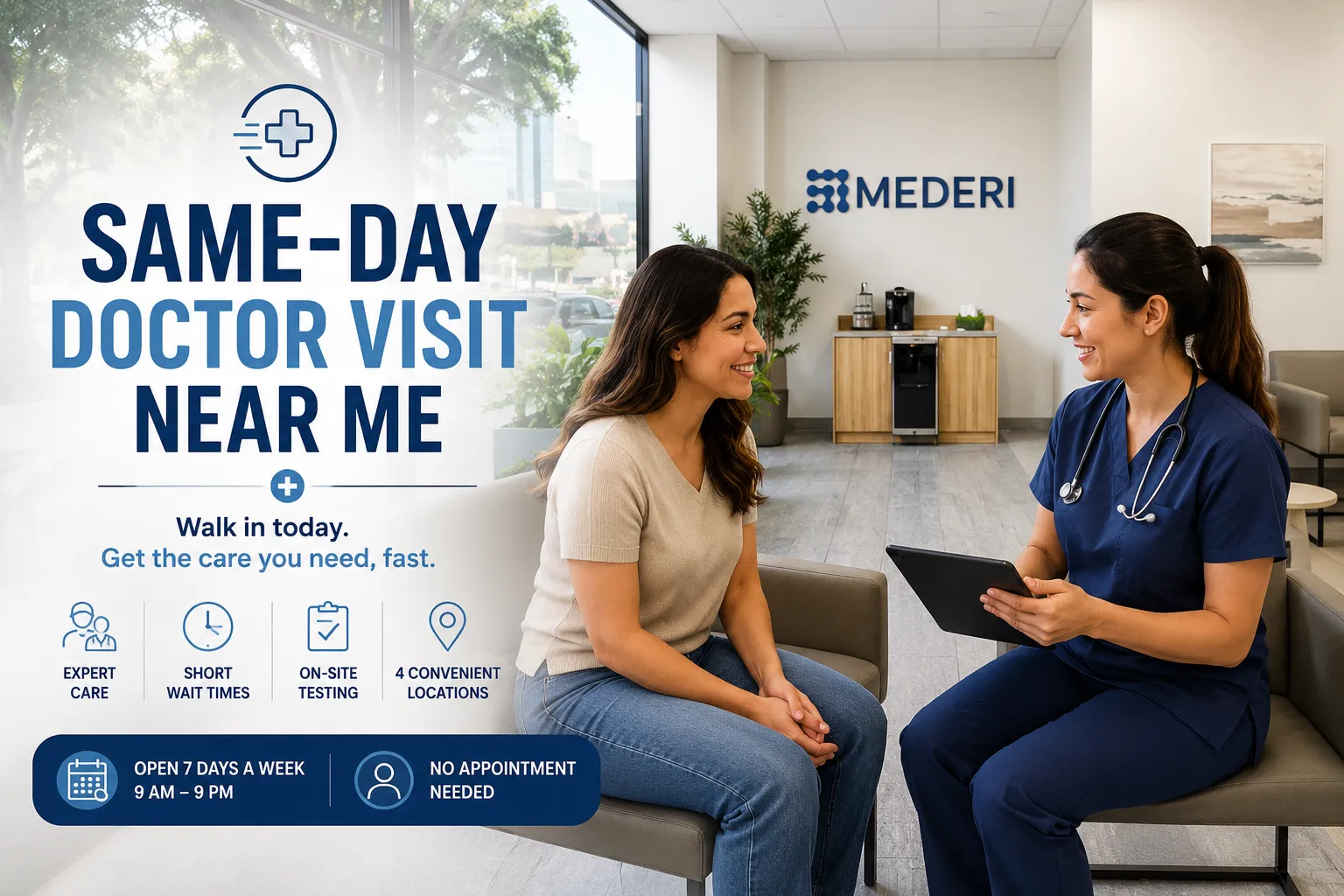
Wait times tend to be shortest in the morning when clinics first open and on weekday afternoons. Evenings, weekends, and flu season are typically busier. If you want to minimize your wait, visiting during off-peak hours is the best strategy. Clinics that are open extended hours, like Mederi Urgent Care (9 AM to 9 PM, seven days a week), give you more flexibility to visit during less busy periods.
What to Expect During Your Visit
Knowing the process ahead of time helps reduce anxiety and makes your visit more efficient.
Check-in: You provide your insurance information (if applicable), fill out basic health forms, and describe your symptoms. Many clinics allow online check-in before you arrive. Triage: A medical assistant takes your vitals, including temperature, blood pressure, heart rate, and oxygen saturation. They ask about your symptoms, medications, and medical history.
Provider Evaluation: A physician, physician assistant, or nurse practitioner examines you, orders any necessary tests or imaging, and discusses findings and treatment options. Testing: If lab work or X-rays are needed, these are typically performed on-site with results available during the visit or within 24 to 48 hours.
Treatment and Discharge: You receive prescriptions, wound care, splinting, or other treatment as needed. The provider gives you clear discharge instructions, including when to follow up with your regular doctor if necessary.
When to Choose Same-Day Urgent Care vs. the ER
Urgent care is the right choice for illnesses and injuries that need attention today but are not life-threatening. This includes fevers, coughs, sore throats, ear pain, minor cuts, sprains, rashes, UTIs, and similar conditions.
Go to the emergency room for chest pain, difficulty breathing, signs of stroke (facial drooping, arm weakness, slurred speech), severe bleeding that will not stop, head injuries with loss of consciousness, broken bones with visible deformity, and allergic reactions causing throat swelling.
If you are unsure, calling your urgent care clinic first can help. The staff can advise whether your situation is appropriate for their facility or if you should go directly to an ER.
Frequently Asked Questions
Do I need an appointment for a same-day visit?
No. Urgent care clinics are designed for walk-in patients. You can visit any time during operating hours without scheduling ahead. Some clinics also offer online booking for added convenience.
Can urgent care prescribe medications?
Yes. Urgent care providers can prescribe antibiotics, pain medications, anti-nausea drugs, asthma inhalers, and many other medications. They cannot prescribe certain controlled substances on a first visit, and they may refer you to your regular doctor for ongoing prescriptions.
Will my urgent care visit be shared with my regular doctor?
You can request that a visit summary be sent to your regular provider. This helps maintain continuity of care and ensures your regular doctor is aware of any new diagnoses or prescriptions.
Can I bring my child to urgent care?
Yes. Many urgent care clinics treat patients of all ages, including children. Mederi Urgent Care offers pediatric services at all locations and treats children for common illnesses, injuries, and routine needs.
See a Doctor Today Without the Wait
When you need medical care now, same-day walk-in visits at urgent care give you access to experienced providers, on-site testing, and immediate treatment, all without the long waits and high costs of the ER.
Mederi Urgent Care is open seven days a week, 9 AM to 9 PM, with four convenient Los Angeles locations. Call 213-442-1890 or visit mederiurgentcare.com to plan your visit today.

You Might Also Enjoy...

When to Take Your Child to Urgent Care: Fevers, Injuries, Ear Infections, Rashes & Warning Signs
Not sure if your child needs urgent care? Learn when to bring kids in for fevers, ear infections, injuries, rashes, and which symptoms require an ER visit instead.
Preventive Healthcare Services: Testing, Physicals, Early Diagnosis & Long-Term Health Benefits
Learn about preventive healthcare services including screenings, physicals, vaccinations, and early diagnosis. Protect your long-term health at Mederi Urgent Care in Los Angeles.