 11 min read
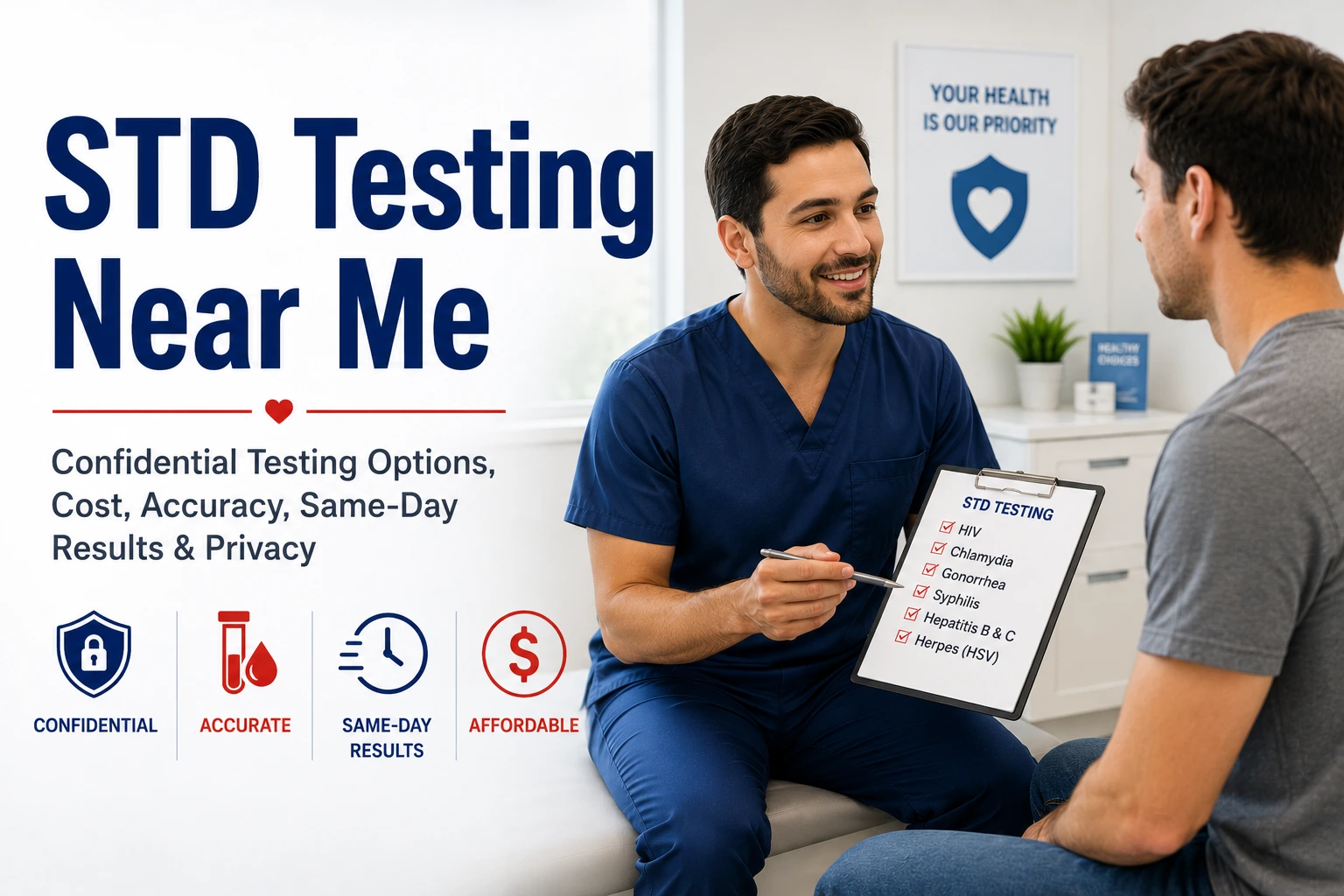
STD TESTING NEAR ME: CONFIDENTIAL TESTING OPTIONS, COST, ACCURACY, SAME-DAY RESULTS & PRIVACY
You noticed something that does not feel right, or maybe a partner mentioned they tested positive. Perhaps you just want a routine checkup because you are sexually active. Whatever your reason, finding reliable STD testing near you matters more than you might think.
According to the CDC, nearly 26 million new sexually transmitted infections occur each year in the United States. Many of these infections show no symptoms at all, which is why regular testing is one of the most responsible steps you can take for your health and your partners.
This guide covers everything you need to know about STD testing: where to go, what it costs, how accurate results are, whether same-day results are available, and how your privacy is protected throughout the process.
Why STD Testing Matters Even Without Symptoms
Most people associate STDs with obvious symptoms like sores, discharge, or pain. The reality is that many common infections, including chlamydia, gonorrhea, and even HIV, can be present for months or years without producing noticeable signs. The CDC estimates that about 1 in 5 people in the U.S. has a sexually transmitted infection at any given time.
Untreated STDs can lead to serious health complications. Chlamydia and gonorrhea can cause pelvic inflammatory disease and infertility in women. Syphilis can damage the heart, brain, and other organs over time. HPV can lead to cervical, throat, and other cancers. Early detection through routine testing prevents these outcomes and stops the spread to sexual partners.
If you are sexually active with new or multiple partners, testing is not optional. It is part of basic healthcare. Walk-in clinics like Mederi Urgent Care make this process straightforward and private.
Types of STD Tests Available
Blood Tests
Blood draws are used to detect infections like HIV, syphilis, herpes (HSV-1 and HSV-2), and hepatitis B and C. These tests look for antibodies your body produces in response to the infection or, in the case of newer HIV tests, the virus itself. Blood-based STD tests are highly accurate, especially when performed at the right time after exposure.
Urine Tests
Urine samples are the standard method for detecting chlamydia and gonorrhea. They are simple, non-invasive, and produce reliable results. You provide a sample at the clinic, and the lab processes it, typically returning results within one to three days.
Swab Tests
Swabs collect samples from the throat, rectum, cervix, or urethra depending on the type of sexual contact. Swab testing is especially important for detecting infections at specific sites that a urine test might miss. For example, oral gonorrhea will only show up on a throat swab, not a urine test.
Rapid Tests
Some clinics offer rapid HIV and syphilis tests that return results in 15 to 30 minutes. These point-of-care tests use a small blood sample, usually from a finger prick. While rapid tests are convenient for quick answers, a positive result typically requires confirmation through a standard lab test.
How Accurate Are STD Tests?
Modern STD testing is highly accurate when performed correctly and at the right time. Nucleic acid amplification tests (NAATs) for chlamydia and gonorrhea have sensitivity rates above 95%. Fourth-generation HIV tests can detect infection as early as 18 to 45 days after exposure with accuracy exceeding 99%.
Timing matters significantly. Every STD has a "window period," which is the time between exposure and when the test can reliably detect the infection. Testing too early during this window can produce a false negative. Here are general window periods for common STDs: Chlamydia and gonorrhea become detectable about 1 to 2 weeks after exposure. HIV tests are most reliable 2 to 6 weeks after exposure depending on the test type. Syphilis can take 3 to 6 weeks to show on a blood test. Herpes antibodies typically appear 2 to 12 weeks after infection.
Your provider at a clinic like Mederi Urgent Care can advise you on the best timing for your test based on your specific exposure and risk factors. If you also have symptoms like painful urination or unusual discharge, a urinary tract infection evaluation may be recommended alongside STD testing to rule out overlapping conditions.
Same-Day STD Testing and Results
One of the biggest concerns people have about STD testing is the wait. Nobody wants to spend days worrying about results. The good news is that many urgent care clinics now offer same-day testing with rapid results for certain infections.
Rapid HIV tests and rapid syphilis tests can deliver results in about 15 to 30 minutes during your visit. For other infections like chlamydia and gonorrhea, lab-processed results typically come back within one to three business days. Some clinics offer expedited processing for faster turnaround.
Walk-in availability at clinics open seven days a week means you do not need to wait for an appointment or take time off work. At Mederi Urgent Care, patients can walk in any day from 9 AM to 9 PM across four Los Angeles-area locations for lab testing and STD screening.
What Does STD Testing Cost?
Cost is a real barrier for many people considering STD testing. Prices vary widely depending on where you go, what tests you need, and whether you have insurance.
With Insurance
Most private insurance plans and Medicaid cover STD testing when it is medically necessary or recommended by a provider. Preventive screening for sexually active individuals is typically covered under the Affordable Care Act with no out-of-pocket cost. Always verify your specific coverage with your insurance company before your visit.
Without Insurance
Out-of-pocket costs for STD testing at urgent care clinics generally range from $50 to $250 depending on the number of tests ordered. Individual tests for chlamydia or gonorrhea are on the lower end, while comprehensive panels that include HIV, hepatitis, herpes, and syphilis cost more. Some community health centers and public health departments offer free or reduced-cost testing.
Urgent Care vs. Emergency Room
An emergency room visit for STD testing can cost $500 to $1,500 or more, making it one of the most expensive options. Urgent care clinics offer the same tests at a fraction of the price with shorter wait times. If cost is a concern, an urgent care visit is almost always the better choice for non-emergency STD testing.
How Your Privacy Is Protected
Privacy is the number one concern that keeps people from getting tested. Understanding how clinics protect your information can put your mind at ease.
HIPAA Protections
All healthcare providers in the United States are required by federal law to protect your medical information under HIPAA (Health Insurance Portability and Accountability Act). This means your test results, the reason for your visit, and your personal details cannot be shared with anyone without your written consent. Your employer, family members, and friends have no legal right to access your medical records.
Confidential vs. Anonymous Testing
Most clinic-based STD testing is confidential, meaning your name is attached to your results, but those results are only shared with you and your healthcare provider. Some public health sites offer anonymous testing for HIV, where no name is associated with the test at all. Both approaches protect your privacy, but anonymous testing provides an extra layer of separation from your identity.
Reporting Requirements
Certain STDs, including chlamydia, gonorrhea, syphilis, and HIV, are reportable to public health departments by law. This means the lab or clinic must notify the local health department of positive results. However, this reporting is done for disease tracking purposes only. Your name is kept confidential within the public health system, and your results are not shared with your employer, insurance company (beyond what is needed for billing), or anyone else.
Who Should Get Tested and How Often
The CDC recommends that all adults and adolescents between ages 13 and 64 get tested for HIV at least once as part of routine healthcare. Beyond that, more frequent testing is recommended based on risk factors:
Sexually active women under 25 should test for chlamydia and gonorrhea annually. Anyone with a new sexual partner or multiple partners should test for all common STDs. Men who have sex with men should consider testing every 3 to 6 months. Pregnant individuals should be tested for HIV, syphilis, and hepatitis B during their first prenatal visit. Anyone who shares injection drug equipment should test for HIV and hepatitis C regularly.
If you fall into any of these categories, scheduling a routine screening is a simple step that takes less than 30 minutes at most walk-in clinics.
What to Expect During Your STD Testing Visit
Knowing what happens during a testing visit can reduce anxiety. Here is what a typical STD testing appointment looks like at an urgent care clinic:
You check in at the front desk. No detailed explanation is required; you can simply say you are there for lab work or a wellness check. A medical provider meets with you privately to discuss your concerns, sexual history, and any symptoms. Based on that conversation, they recommend specific tests. Depending on the tests, you provide a blood sample, urine sample, or allow a swab to be collected. The visit itself takes about 15 to 30 minutes. Results arrive within the timeline discussed, and the clinic contacts you privately with your results.
If a test comes back positive, the provider discusses treatment options with you. Many STDs are curable with a course of antibiotics. Others, like herpes and HIV, are manageable with ongoing medication. Clinics like Mederi Urgent Care provide both testing and treatment planning so you do not need to visit multiple providers.
Where to Find STD Testing in Los Angeles
Los Angeles has many options for STD testing, including public health clinics, Planned Parenthood locations, and urgent care facilities. When choosing where to go, consider these factors: walk-in availability, same-day testing, confidential results, cost transparency, and the ability to start treatment on-site if needed.
Mederi Urgent Care offers confidential STD testing at locations in Hollywood, Glendale, Los Feliz, CA, Burbank, and La Crescenta. The clinics are open seven days a week from 9 AM to 9 PM, accept walk-ins, and provide on-site lab services with personalized care from experienced providers. No appointment is necessary.
Frequently Asked Questions
Can I get tested for STDs without my parents knowing?
Yes. In California, minors aged 12 and older can consent to STD testing and treatment without parental notification. Your visit is confidential under state law and HIPAA protections.
How soon after unprotected sex should I get tested?
It depends on the infection. Chlamydia and gonorrhea are detectable about 1 to 2 weeks after exposure. HIV tests are most accurate 2 to 6 weeks later. Your provider can recommend the right timing based on your situation.
Do STD test results show up on insurance statements?
If you use insurance, a general description of services may appear on your Explanation of Benefits. It will not include your specific results, but it may indicate that lab work was performed. If privacy is a concern, you can pay out of pocket to keep the visit entirely off your insurance records.
What STDs are included in a standard panel?
A standard STD panel typically includes testing for chlamydia, gonorrhea, syphilis, HIV, and hepatitis B and C. Some panels also include herpes (HSV-1 and HSV-2) and trichomoniasis. Your provider can customize testing based on your risk factors and concerns.
Is STD testing painful?
Most patients describe the experience as quick and minimally uncomfortable. Blood draws involve a brief needle stick, urine tests are completely painless, and swab tests cause only minor discomfort that lasts a few seconds.
Take Control of Your Sexual Health Today
Getting tested is one of the simplest and most responsible decisions you can make for yourself and your partners. Whether you are experiencing symptoms, had a recent exposure, or just want routine screening as part of your preventive healthcare, confidential testing is available without long waits or complicated scheduling.
Mederi Urgent Care provides walk-in STD testing seven days a week at locations across Los Angeles. Call 213-442-1890 or visit mederiurgentcare.com to book your visit today.

You Might Also Enjoy...
Primary Care vs Urgent Care: Differences, When to Visit Each, Cost Comparison & How They Work Together
Not sure whether to visit primary care or urgent care? Compare costs, services, when to choose each, and how they complement your healthcare at Mederi Urgent Care LA.

Allergy Symptoms & Treatment: Seasonal, Food & Skin Allergies, Testing, Medications & When to Get Help
Dealing with allergy symptoms? Learn about seasonal, food, and skin allergies, available testing, medications, and when to seek same-day treatment at Mederi Urgent Care LA.