 9 min read
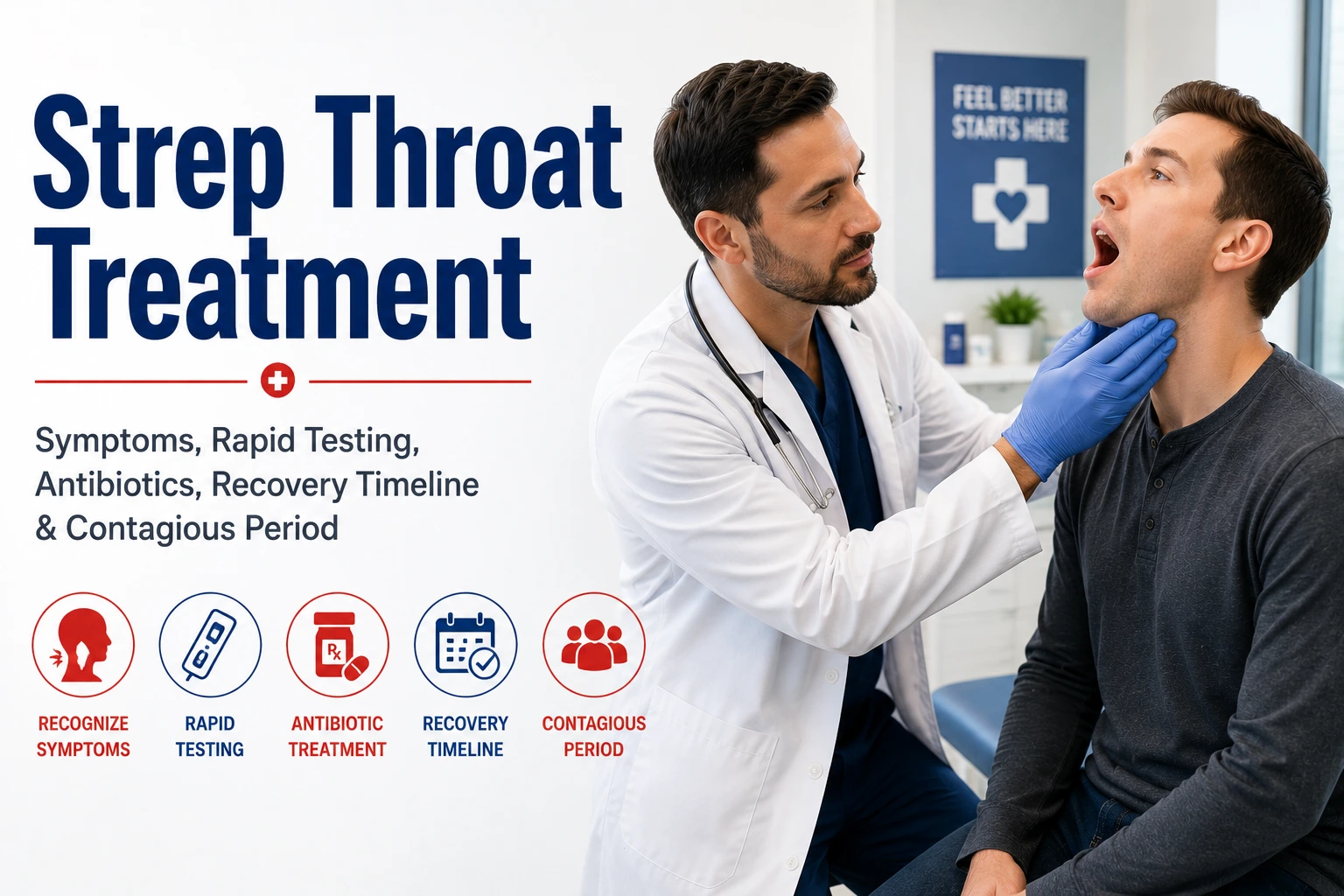
STREP THROAT TREATMENT: SYMPTOMS, RAPID TESTING, ANTIBIOTICS, RECOVERY TIMELINE & CONTAGIOUS PERIOD
Your throat is on fire. Swallowing feels like razor blades. Your child came home from school yesterday with the same complaint, and now you are wondering whether this is just a bad cold or something that needs medical attention.
Strep throat is one of the most common bacterial infections, particularly among children ages 5 to 15. The CDC reports that group A Streptococcus causes between 5.2 and 5.9 million outpatient illness visits each year in the United States. Unlike a viral sore throat, strep requires antibiotic treatment to prevent complications and stop the spread.
This guide explains how to recognize strep throat symptoms, what happens during rapid testing, which antibiotics are prescribed, how quickly you can expect to recover, and how long you remain contagious.
Recognizing Strep Throat Symptoms
Strep throat symptoms typically appear 2 to 5 days after exposure to the bacteria. The onset is usually sudden rather than gradual, which is one way to distinguish it from a viral sore throat or cold.
Common symptoms include a severe sore throat that comes on quickly, pain when swallowing, red and swollen tonsils (sometimes with white patches or streaks of pus), tiny red spots on the roof of the mouth, swollen and tender lymph nodes in the front of the neck, fever of 101 F or higher, headache, and body aches.
Strep throat typically does not come with cough, runny nose, hoarseness, or conjunctivitis. If those symptoms are present, a viral infection is more likely. However, the only way to confirm strep is through testing, since symptoms alone are not reliable enough for diagnosis.
How Rapid Strep Testing Works
A rapid strep test is the quickest way to determine whether your sore throat is caused by group A Streptococcus bacteria. The test takes about 5 to 10 minutes and can be performed right at the clinic during your visit.
During the test, a healthcare provider swabs the back of your throat and tonsils with a cotton-tipped swab. The sample is then processed using a rapid antigen detection test. If the bacteria are present, the test produces a positive result within minutes.
Rapid strep tests are highly specific, meaning a positive result is very reliable. However, they can occasionally produce false negatives. If the rapid test is negative but your provider strongly suspects strep based on your symptoms, they may send a throat culture to a lab for confirmation. Throat cultures take 24 to 48 hours but are more sensitive.
At Mederi Urgent Care, rapid strep testing is available on a walk-in basis seven days a week. Results are typically ready before you leave the clinic, so treatment can start immediately if needed.
Antibiotic Treatment for Strep Throat
First-Line Antibiotics
Penicillin and amoxicillin are the standard first-line treatments for strep throat. The American Academy of Pediatrics and the Infectious Diseases Society of America both recommend these antibiotics as the preferred choice because group A Strep has never developed resistance to penicillin. A typical prescription is penicillin V taken orally for 10 days, or a single intramuscular injection of penicillin G benzathine for patients who may have difficulty completing a full oral course. Amoxicillin is commonly prescribed for children because it tastes better and is available in chewable tablets and liquid form.
Alternatives for Penicillin Allergies
If you are allergic to penicillin, your provider will prescribe an alternative. Common options include cephalexin (a first-generation cephalosporin, safe for most patients with non-severe penicillin allergies), azithromycin (a 5-day course), or clindamycin.
Why Completing the Full Course Matters
Even though most people feel significantly better within 2 to 3 days of starting antibiotics, completing the full prescribed course is critical. Stopping early can allow surviving bacteria to multiply, potentially leading to a relapse or complications like rheumatic fever, kidney inflammation, or peritonsillar abscess.
Recovery Timeline: What to Expect Day by Day
Most patients notice a clear pattern of improvement once antibiotics are started:
Day 1: Fever typically begins to drop within 24 hours of the first antibiotic dose. Throat pain may still be significant. Day 2 to 3: Sore throat pain decreases noticeably. Energy levels begin to improve. Most patients feel well enough to return to normal activities. Day 4 to 5: Symptoms are largely gone for most people. Mild throat irritation may linger. Day 7 to 10: Full antibiotic course is completed. All symptoms should be resolved.
Over-the-counter pain relievers like ibuprofen or acetaminophen can help manage throat pain and fever during the first few days. Warm liquids, throat lozenges, and staying hydrated also support recovery. If your symptoms worsen or you develop new symptoms after starting treatment, contact your provider.
How Long Is Strep Throat Contagious?
Without treatment, a person with strep throat is contagious for 2 to 3 weeks, even after symptoms start to improve. The bacteria spread through respiratory droplets when an infected person coughs, sneezes, or talks, and through shared food, drinks, or utensils.
With antibiotic treatment, most people are no longer contagious after 12 to 24 hours of medication. This is why the CDC and most school districts require at least 12 hours of antibiotic therapy and no fever before returning to school or work.
To prevent spreading strep throat to others in your household, wash your hands frequently, avoid sharing cups and utensils, cover coughs and sneezes, and replace your toothbrush after you have been on antibiotics for 24 hours.
When Strep Throat Keeps Coming Back
Some people, particularly children in school settings, experience recurrent strep throat infections. If strep returns multiple times within a year, your provider may recommend additional evaluation. Possible reasons for recurrence include exposure to a carrier in the household, incomplete antibiotic courses, or antibiotic tolerance (not the same as resistance).
In cases of frequent recurrence (typically 7 or more episodes in a single year, or 5 per year for two consecutive years), a tonsillectomy may be recommended. This is a decision made between the patient, their family, and an ENT specialist. For recurring throat infections, an initial evaluation at an urgent care clinic can help determine whether further specialist care is needed.
Strep Throat in Children vs. Adults
Strep throat is most common in children between ages 5 and 15, but adults can get it too. The presentation differs slightly between age groups.
Children are more likely to experience stomach pain, nausea, or vomiting alongside throat symptoms. They may also develop a sandpaper-like rash known as scarlet fever, which is caused by the same group A Strep bacteria. Adults tend to have milder symptoms overall, but complications from untreated strep can be more severe in adults, particularly those with weakened immune systems.
Mederi Urgent Care provides pediatric services for children of all ages, with rapid strep testing and same-day treatment available at all four Los Angeles-area locations.
Frequently Asked Questions
Can strep throat go away on its own without antibiotics?
Strep throat symptoms may eventually improve without treatment, but the infection itself can persist and lead to serious complications including rheumatic fever and post-streptococcal kidney disease. Antibiotics are strongly recommended to clear the infection, prevent complications, and reduce how long you are contagious.
How is strep throat different from a regular sore throat?
A regular sore throat is usually caused by a virus and comes with cold symptoms like a runny nose, cough, and congestion. Strep throat is bacterial, comes on suddenly, and typically involves high fever, swollen lymph nodes, and no cough. A rapid strep test confirms the difference.
Can I take a rapid strep test at an urgent care without an appointment?
Yes. Most urgent care clinics, including Mederi Urgent Care, offer walk-in rapid strep testing. Results are available in minutes, and treatment can start the same day if the test is positive.
Is strep throat seasonal?
Strep throat is most common in late fall, winter, and early spring, though it can occur year-round. Close contact in schools and group settings during colder months increases transmission.
Get Tested and Treated for Strep Throat Today
If your throat pain came on suddenly, swallowing hurts, and you have a fever, do not wait it out. A rapid strep test takes minutes, and if the result is positive, antibiotics can have you feeling better within a day or two.
Mederi Urgent Care offers walk-in strep throat testing and treatment seven days a week, 9 AM to 9 PM, at four Los Angeles locations. Call 213-442-1890 or visit mederiurgentcare.com to schedule your visit.

You Might Also Enjoy...

Primary Care vs Urgent Care: Differences, When to Visit Each, Cost Comparison & How They Work Together
Not sure whether to visit primary care or urgent care? Compare costs, services, when to choose each, and how they complement your healthcare at Mederi Urgent Care LA.

Allergy Symptoms & Treatment: Seasonal, Food & Skin Allergies, Testing, Medications & When to Get Help
Dealing with allergy symptoms? Learn about seasonal, food, and skin allergies, available testing, medications, and when to seek same-day treatment at Mederi Urgent Care LA.