 14 min read
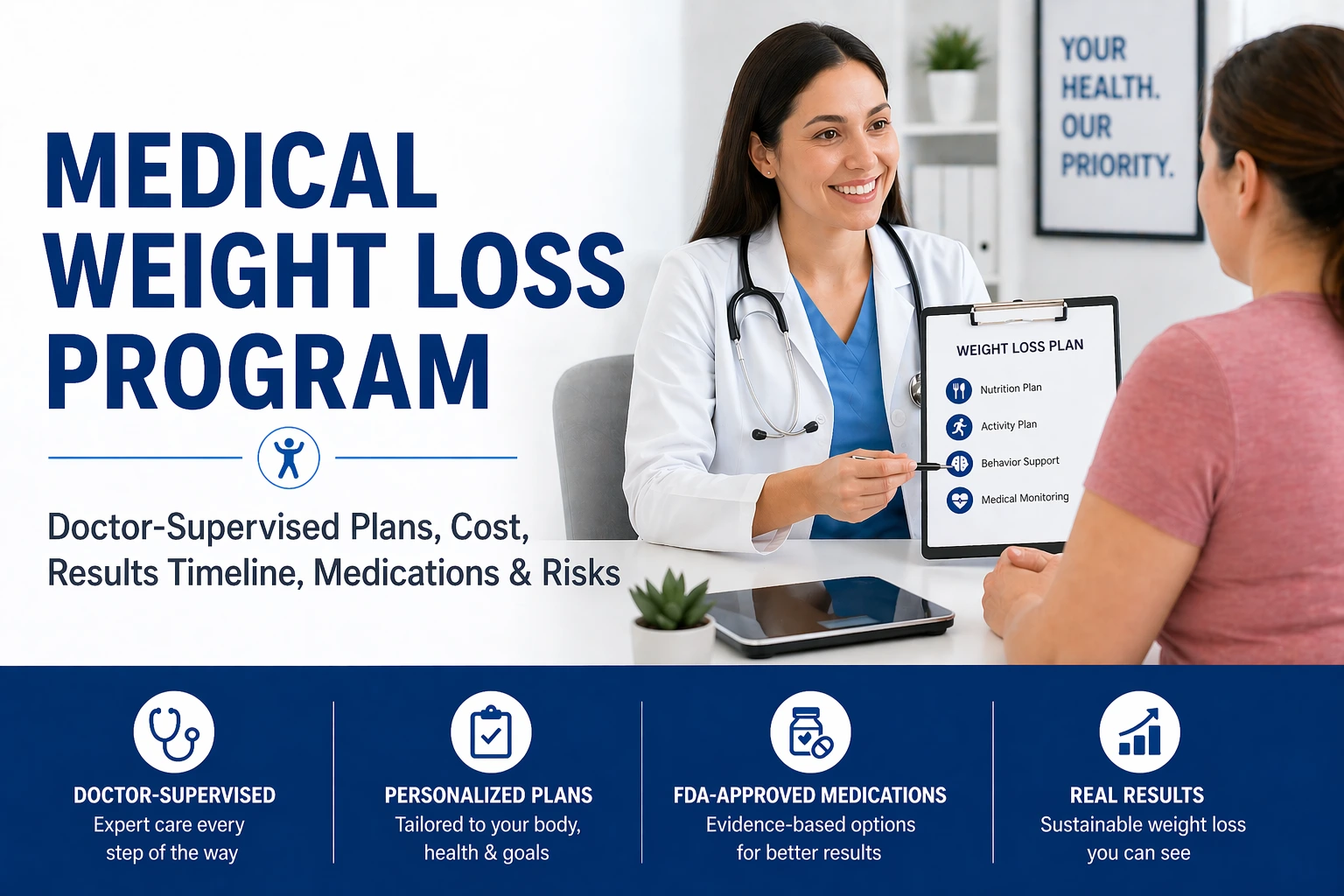
MEDICAL WEIGHT LOSS PROGRAM: DOCTOR-SUPERVISED PLANS, COST, RESULTS TIMELINE, MEDICATIONS & RISKS
Are you struggling with weight loss despite your best efforts? Tried diet and exercise alone without lasting results? A medical weight loss program offers a different approach.
Instead of generic diet plans, you get real medical supervision, prescription medications when needed, and a plan built specifically for your body and health history.
At Mederi Urgent Care Weight loss is not one-size-fits-all. At Mederi Urgent Care, our doctors create personalized treatment plans that address why your body holds onto weight. This guide covers exactly what a medical weight loss program involves, realistic results timelines, how much it costs, medications your doctor might recommend, and important side effects you need to know about.
What Is a Medical Weight Loss Program?
A medical weight loss program is supervised by a doctor who uses evidence-based medicine to help you lose weight. Unlike commercial weight loss programs, a medical program includes prescription medications, nutritional counseling backed by science, regular monitoring of your health, and adjustments to your plan as your body changes.
Your doctor starts by reviewing your complete medical history, current health conditions, medications you take, and any previous weight loss attempts. They run blood tests to check thyroid function, blood sugar levels, and metabolic markers. This information guides every aspect of your treatment. Some patients need medication. Others succeed with nutrition changes and behavioral support. Many need a combination of both.
The program includes regular follow-up visits where your doctor tracks your progress, measures vital signs, adjusts your medications if needed, and addresses any side effects. This supervision matters. It keeps you safe, catches problems early, and helps you stay on track. Visit one of our locations in Glendale, Hollywood, or Los Feliz, CA to start.
How Doctor-Supervised Plans Work
Your first appointment sets the foundation for success. Expect to spend 30 to 60 minutes with your doctor discussing your weight journey, current eating habits, stress levels, sleep quality, and exercise routine. They will ask about previous diets you tried, what worked, and what failed.
Initial Assessment and Testing
Before starting any medication or diet plan, your doctor orders blood work. Standard tests check thyroid-stimulating hormone (TSH) to rule out thyroid problems that slow metabolism, fasting blood glucose to screen for diabetes, insulin levels to detect insulin resistance, lipid panel to assess cholesterol and triglycerides, and liver function tests because some weight loss medications affect liver health. Your doctor also measures your height, weight, body mass index (BMI), blood pressure, and sometimes body composition. This baseline becomes your reference point for measuring progress and catching any health changes along the way.
Personalized Nutrition and Behavior Plan
Your doctor or a nutritionist creates a diet plan based on your preferences, cultural food traditions, and lifestyle. This is not a fad diet. It focuses on whole foods, adequate protein, fiber, and hydration. Most plans involve reducing processed foods and sugary drinks. The emphasis is on changes you can maintain for life, not a temporary crash diet. Behavioral support addresses the habits that led to weight gain. Your doctor discusses emotional eating, stress management, sleep improvement, and increasing physical activity. Small sustainable changes matter more than drastic restrictions.
Regular Monitoring and Adjustments
You return for follow-up visits every two to four weeks during the first three months. Your doctor weighs you, checks your blood pressure, reviews how the diet and any medications are working, and listens to side effects or concerns. Lab work repeats every three to six months to ensure your kidneys, liver, and other organs remain healthy. If one medication causes problems, your doctor switches you to another option. If you hit a weight loss plateau, they adjust the plan.
Medical Weight Loss Medications: Options and How They Work
Medication plays a role in many medical weight loss programs, but not every patient needs it. Your doctor prescribes medication only if diet and exercise alone are not producing results or if you have obesity-related health conditions that medication can help address.
GLP-1 Receptor Agonists (Semaglutide, Tirzepatide)
These medications work by signaling your brain that your stomach is full, reducing hunger and cravings. They slow how fast your stomach empties, so you feel satisfied longer. Semaglutide (Ozempic, Wegovy) and tirzepatide (Mounjaro, Zepbound) are FDA-approved for weight loss. Most patients lose 15 to 22 percent of their body weight over 68 weeks, though results vary. You inject these medications once weekly under your skin. Common side effects include nausea, vomiting, diarrhea, and constipation, especially when starting. Serious but rare side effects include thyroid cancer risk (avoid if you have personal or family history of medullary thyroid cancer) and pancreatitis. Your doctor monitors you carefully.
Phentermine
Phentermine suppresses appetite by stimulating your central nervous system. It works quickly, often showing results within the first two weeks. Most patients take it for 12 weeks or less, though some doctors use longer treatment under close supervision. Side effects include increased heart rate, elevated blood pressure, insomnia, restlessness, and nervousness. It is not suitable if you have heart disease, uncontrolled high blood pressure, or a history of drug abuse. Your doctor checks your heart health and blood pressure regularly on phentermine.
Orlistat
Orlistat works differently. It blocks fat absorption in your intestines, so your body eliminates about 30 percent of dietary fat instead of storing it. It is available over-the-counter (Alli) or by prescription (Xenical). Results are modest, with average weight loss of 5 to 10 pounds over 12 months. Side effects are mainly gastrointestinal: urgent bowel movements, oily spotting, and stomach cramping, especially after fatty meals. Orlistat does not cause systemic side effects like other medications, making it suitable for patients who cannot tolerate stronger drugs.
Combination Therapy
Some doctors prescribe multiple medications together when one alone is not producing results. For example, phentermine combined with topiramate, or GLP-1 agonists combined with other agents. Combination therapy requires more careful monitoring but can produce better outcomes for select patients. Your doctor determines if this approach is right for you.
Medical Weight Loss Results: Realistic Timeline
How quickly will you lose weight? Results depend on your starting weight, age, metabolism, medications used, diet adherence, exercise level, and overall health. Most patients begin seeing results within two to four weeks, but initial weight loss often includes water weight.
Weeks 1–4
Expected weight loss: 2–5 lbs. Key changes: Reduced cravings and increased energy levels as your body adjusts to the new plan.
Weeks 5–8
Expected weight loss: 4–8 lbs. Key changes: Clothes fit better and digestion improves as dietary habits take hold.
Weeks 9–12
Expected weight loss: 8–15 lbs. Key changes: Noticeable body composition changes become visible to you and others.
3–6 Months
Expected weight loss: 15–30 lbs. Key changes: Blood pressure and cholesterol improvements begin to show in your lab work.
6–12 Months
Expected weight loss: 30–50+ lbs. Key changes: Sustained energy, better sleep quality, and significant improvements in overall health markers.
Beyond the Scale
Weight loss brings changes beyond numbers on a scale. Blood pressure often drops within the first month. Blood sugar improves within two to four weeks. Cholesterol and triglycerides improve over three to six months. Joint pain lessens, sleep quality improves, and energy increases. Many patients report better mood and reduced anxiety as they lose weight and feel more confident in their bodies.
Cost of Medical Weight Loss Programs
Medical weight loss programs vary in cost depending on where you go and what services are included. Understanding pricing helps you plan financially and compare options.
Initial Consultation and Testing
Your first appointment typically costs $150 to $300. This includes the doctor's evaluation and blood work to assess your health. Some insurance plans cover initial visits if your doctor codes it as a medically necessary consultation for obesity treatment. Ask your insurance company or the clinic about coverage before your appointment.
Monthly Program Costs
Ongoing program costs generally range from $150 to $400 per month, depending on how often you visit and what services are included. Some clinics charge per visit (typically $75 to $150), while others offer monthly packages. Visits typically happen every two to four weeks, so plan for at least two to four visits per month during the first three months, then every four to six weeks after that.
Medication Costs
Prescription medications represent the largest variable cost. Phentermine costs $30 to $100 per month, often covered by insurance if medically justified. GLP-1 agonists like semaglutide or tirzepatide cost $900 to $1,500 per month without insurance. With insurance, you might pay $250 to $500 depending on your plan. Some manufacturers offer patient assistance programs if cost is a barrier.
Insurance Coverage
Many insurance plans cover medical weight loss programs if you have a BMI over 30 or a BMI over 27 with weight-related health conditions like diabetes or high blood pressure. Coverage varies widely. Some plans cover doctor visits and medications; others cover only visits. Call your insurance company and ask what they cover for obesity treatment. Ask Mederi Urgent Care about our relationships with major insurers.
Medications and Potential Side Effects: What to Know
All medications carry potential side effects. Your doctor uses medications only when benefits outweigh risks. Knowing what to expect helps you stay safe and manage side effects when they occur.
Common Side Effects and How to Manage Them
Nausea and vomiting: Take medication with food, eat smaller meals, stay hydrated, and avoid greasy foods. Constipation or diarrhea: Increase fiber slowly, drink extra water, and increase activity levels. Insomnia (with phentermine): Take medication in the morning, not evening, and avoid caffeine after noon. Headaches: Stay hydrated and rest in a dark room. Dry mouth: Sip water throughout the day and chew sugar-free gum. Always talk to your doctor if any side effect is severe or persists.
When to Contact Your Doctor Immediately
Stop taking your medication and contact your doctor immediately if you experience chest pain or pressure, shortness of breath, or irregular heartbeat; severe abdominal pain especially upper right side; persistent vomiting preventing food or water intake; severe allergic reaction including swelling of face, lips, or throat; extreme dizziness or fainting; or signs of pancreatitis such as severe back and stomach pain.
Medication Safety and Monitoring
Your doctor monitors your safety with regular blood work, blood pressure checks, and heart function assessments depending on which medication you take. Be honest about side effects at each visit. Never adjust your dose without talking to your doctor. If one medication is not working or causing problems, tell your doctor. Often a simple medication change solves the issue while keeping you on track with weight loss.
Risks and Who Should Avoid Medical Weight Loss Programs
Medical weight loss programs are safe for most people when properly supervised. However, certain individuals should avoid them or proceed with extreme caution.
Who Should Not Use These Programs
Pregnant or nursing women should avoid medical weight loss, as it can harm the developing baby or reduce milk supply. People with a history of eating disorders should speak to their doctor before starting. Those with certain heart conditions, uncontrolled high blood pressure, severe kidney or liver disease, or who take medications that interact with weight loss drugs require careful evaluation before proceeding.
Realistic Expectations and Long-Term Success
Medical weight loss programs help you lose weight, but they are not permanent solutions on their own. Most patients regain some weight after stopping medications or the program. Success depends on continuing healthy eating habits and exercise long-term. Think of the program as teaching you how to maintain weight loss, not just achieve it. The goal is sustainable lifestyle change, not a quick fix.
Getting Started with a Medical Weight Loss Program
Ready to take the next step? Schedule a consultation with a doctor at Mederi Urgent Care today. Your first appointment will be a conversation about your weight, health history, and goals. Your doctor will explain whether a medical weight loss program is right for you and what your personalized plan looks like.
If you have questions about cost, insurance coverage, or medications, bring them up. Your doctor is here to answer them and create a plan that works for your life and budget. Weight loss is possible. It takes time, the right support, and often medical help. Let Mederi Urgent Care be your partner in this journey.
Frequently Asked Questions About Medical Weight Loss Programs
How much weight will I lose in the first month?
Most patients lose 3 to 8 pounds in the first month. Some of this is water weight, especially if you cut back on carbs. The pace slows after the first few weeks as your body adjusts. This is normal. Consistent, gradual weight loss is healthier and more sustainable than rapid drops.
Can I take weight loss medication if I have diabetes or high blood pressure?
Many patients with diabetes and high blood pressure use medical weight loss medications successfully. Your regular doctor will review your current medications and conditions carefully. Some medications even help both weight loss and blood pressure control. Never start a weight loss program without telling your doctor about all your health conditions and medications.
What happens to my weight when I stop the medication?
Some weight regain is common after stopping medication. However, if you continue eating well and exercising, you can maintain most of your weight loss. Many doctors recommend staying on medication longer or at lower doses to prevent regain. The key is developing lasting habits during the program so you do not return to old eating patterns.
Is a medical weight loss program covered by insurance?
Coverage varies by insurance company and your specific plan. Many major insurers cover it if your BMI is over 30 or over 27 with weight-related conditions. Call your insurance company and ask about coverage for obesity treatment or weight management programs. Ask Mederi Urgent Care to verify your benefits before your first appointment.
How long does a medical weight loss program typically last?
Programs usually last 12 to 24 weeks for active weight loss, with optional ongoing maintenance visits. Some patients need 6 months to a year to reach their goal weight. After that, maintenance visits once a month or every few months help you stay on track. The total timeframe depends on how much weight you need to lose and how quickly your body responds.
Can I exercise while on medical weight loss medication?
Yes, exercise is encouraged. Combining medication with physical activity produces better results than medication alone. Start with light exercise like walking if you have not been active. As you lose weight and feel better, increase intensity gradually. Your doctor can recommend appropriate exercise levels based on your current fitness and health status.
What if I have side effects from the medication?
Tell your doctor about any side effects at your next visit or call if they are severe. Most side effects improve within a few weeks. If they do not, your doctor can switch you to a different medication, adjust your dose, or try a different approach. Never stop taking medication without talking to your doctor first.
Take Control of Your Weight with Medical Support
A medical weight loss program offers real help backed by science and medical supervision. You get prescription medications when appropriate, personalized nutrition guidance, behavioral support, and regular monitoring to keep you safe. Results take time, but they are achievable with the right program and commitment.
At Mederi Urgent Care, your doctor creates a plan based on your health, your goals, and what works for your body. Do not let another year go by struggling alone. Schedule a consultation and discover how medical weight loss can work for you.

You Might Also Enjoy...

Primary Care vs Urgent Care: Differences, When to Visit Each, Cost Comparison & How They Work Together
Not sure whether to visit primary care or urgent care? Compare costs, services, when to choose each, and how they complement your healthcare at Mederi Urgent Care LA.

Allergy Symptoms & Treatment: Seasonal, Food & Skin Allergies, Testing, Medications & When to Get Help
Dealing with allergy symptoms? Learn about seasonal, food, and skin allergies, available testing, medications, and when to seek same-day treatment at Mederi Urgent Care LA.