 5 min read
WHAT IS URGENT HEALTH CARE: HOW IT DIFFERS FROM ROUTINE CARE, WHAT IT TREATS & WHEN TO GO SAME DAY
What Is Urgent Health Care, Exactly?
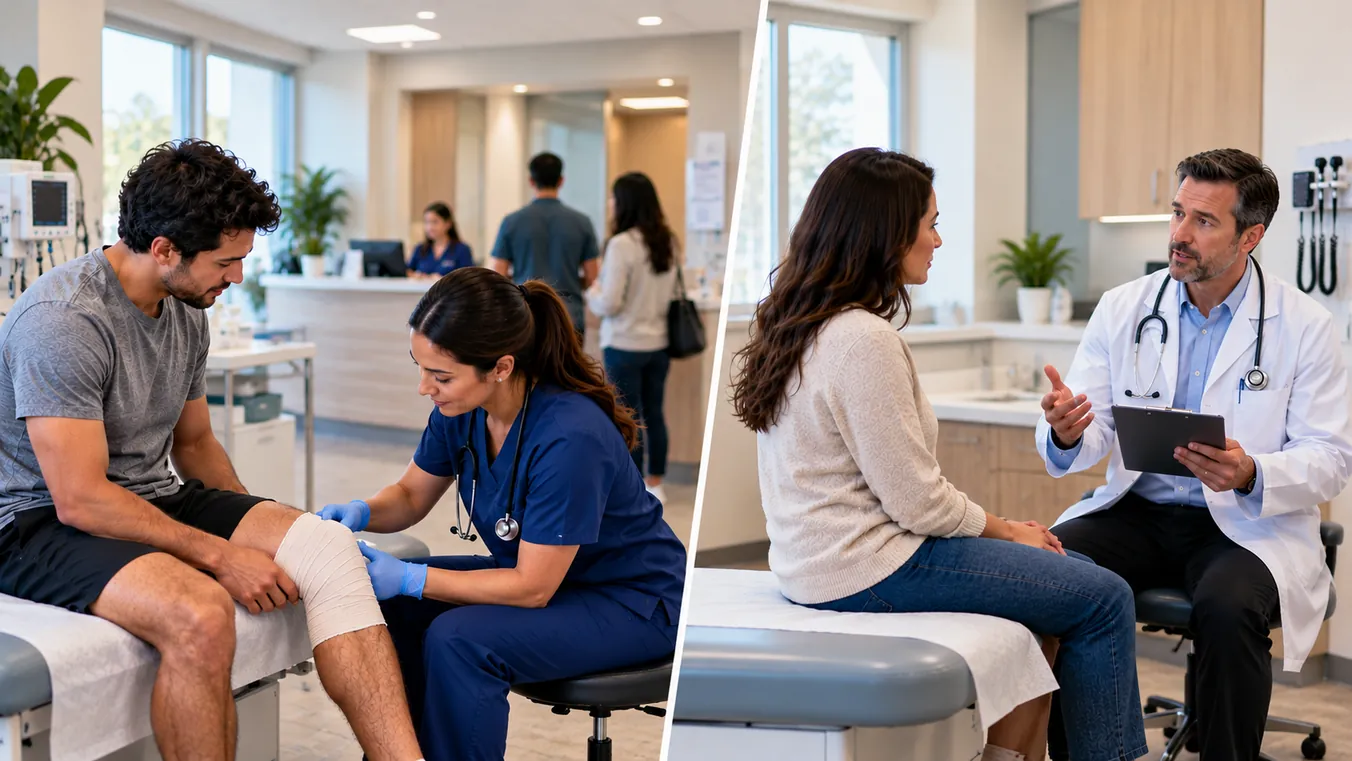
Urgent health care is walk-in medical treatment for problems that are too urgent to wait for a scheduled doctor's appointment but not severe enough to need an emergency room. Think a bad sore throat on a Saturday, a sprained ankle, or a child with a fever that won't quit. Urgent care clinics run extended hours, take walk-ins, and are staffed to handle exactly this category of same-day, non-life-threatening care.
Urgent Care vs. Routine (Primary) Care: What's the Difference?
The two aren't competing with each other, they cover different jobs in your overall care.
| Urgent Care | Routine (Primary) Care | |
|---|---|---|
| What it's for | Same-day, acute, non-life-threatening problems | Ongoing health management and prevention |
| Examples | Infections, minor injuries, rapid testing, sports physicals | Annual physicals, chronic disease management, vaccines |
| Scheduling | Walk-in, no appointment needed | Scheduled in advance |
| Typical wait | 15 to 45 minutes | Appointment-based |
| Cost (self-pay) | Roughly $100 to $300 | Roughly $150 to $300 |
For the full breakdown, including how the two work together and how urgent care visit notes can be shared with your regular doctor, see our guide on primary care vs urgent care.
What Conditions Does Urgent Care Treat?
Urgent care is built for the middle ground, too urgent for a scheduled visit, not severe enough for the ER. Common reasons people walk in include:
- Cold, flu, and respiratory infections
- Strep throat and other rapid-test infections
- Minor cuts, sprains, and injuries
- Ear infections and sore throats
- Urinary tract infections
- Sports, school, and work physicals
- COVID-19 and other rapid testing
You can see the full range of services Mederi Urgent Care offers, since what one clinic treats can vary.
What Urgent Care Doesn't Treat
Urgent care is not a substitute for the emergency room. Go to the ER or call 911 for chest pain, difficulty breathing, severe bleeding, head injuries with loss of consciousness, stroke symptoms, or any condition that feels life-threatening. Urgent care also isn't the right fit for managing an ongoing chronic condition like diabetes or hypertension, that's what your primary care provider is for.
When Should You Go Same Day?
Go in the same day if a symptom is getting worse, won't resolve on its own, or your primary care doctor can't fit you in soon enough. Some general signals it's time to go:
- A fever that persists more than a couple of days or comes with other worsening symptoms
- Pain, swelling, or a wound that looks like it could be infected
- A possible sprain, break, or injury that needs same-day evaluation
- Symptoms that are disrupting your day but aren't an emergency
If the question is about a child specifically, our guide on when to take your child to urgent care breaks down fever thresholds by age, warning signs, and when it's actually an ER situation instead.
Where to Walk In Same Day
Mederi Urgent Care takes walk-ins at:
- Hollywood urgent care clinic, open 9 AM to 9 PM every day
- Glendale urgent care center, open 9 AM to 9 PM every day
- Los Feliz urgent care location, open 10 AM to 10 PM every day
with Burbank and La Crescenta locations opening soon.
Conclusion
Urgent health care fills the gap between your regular doctor and the emergency room, same-day treatment for problems that can't wait but aren't life-threatening. Mederi Urgent Care offers walk-in access across multiple Los Angeles locations, an average wait under 9 minutes, and self-pay costs well below what an ER visit runs, so you're not stuck choosing between waiting it out and overpaying.
Frequently Asked Questions
What counts as urgent health care?
Illnesses and injuries that need attention the same day but aren't life-threatening, things like infections, minor injuries, sprains, and rapid testing. If it's life-threatening, go to the ER instead.
Is urgent care cheaper than the ER?
Yes, significantly. A self-pay urgent care visit typically runs $100 to $300, compared to $2,000 or more for an ER visit without insurance.
Do I need an appointment for urgent care?
No. Mederi Urgent Care accepts walk-ins at every open location, with an average wait under 9 minutes.
Can urgent care replace my regular doctor?
No. Urgent care handles same-day, acute problems. Your primary care doctor manages ongoing conditions, annual physicals, and preventive care over time. The two work together, not against each other.
When should I go to the ER instead of urgent care?
For chest pain, trouble breathing, severe bleeding, a head injury with loss of consciousness, stroke symptoms, or anything that feels life-threatening, go to the ER or call 911.
How long is the wait at urgent care?
At Mederi Urgent Care, the average wait runs under 9 minutes, typically faster than a same-day primary care slot.
Key Takeaways
- Urgent care treats same-day, non-life-threatening problems, routine care manages ongoing health over time, they work together rather than compete
- Self-pay urgent care runs roughly $100 to $300, well below the $2,000+ average for an ER visit
- Mederi Urgent Care takes walk-ins with an average wait under 9 minutes across multiple LA locations

You Might Also Enjoy...

Urgent Care for Kids in Los Angeles: Pediatric Conditions Treated, What Parents Need to Bring & Walk-In Hours
Urgent care for kids in Los Angeles: conditions treated, immunizations, what to bring, cost without insurance, and when to go to the ER instead.

Family Doctor in Los Angeles: Primary Care vs Walk-In Options, Same-Day Appointments & Insurance Coverage
Choosing a family doctor in Los Angeles? Compare traditional practices with Mederi's primary care, same-day appointment access, and insurance coverage.