 11 min read
URGENT CARE VS EMERGENCY ROOM: COST, WAIT TIME, INSURANCE COVERAGE & WHEN YOU SHOULD GO
Navigating healthcare options when you're feeling unwell or dealing with an injury can be incredibly stressful. You might be asking yourself, "Is this serious enough for the emergency room, or can an urgent care clinic handle it?" Making the right choice isn't just about getting proper medical attention; it also impacts your wait time, your wallet, and how quickly you can get back to feeling better.
This guide is designed to help you understand the key differences between urgent care centers and emergency rooms. We'll break down the types of conditions each treats, compare costs and wait times, explain insurance coverage, and give you clear advice on when and where to seek the best care.
Our goal is to empower you to make informed decisions for your health and well-being. When you need immediate but non-life-threatening care, Mederi Urgent Care is here for you.
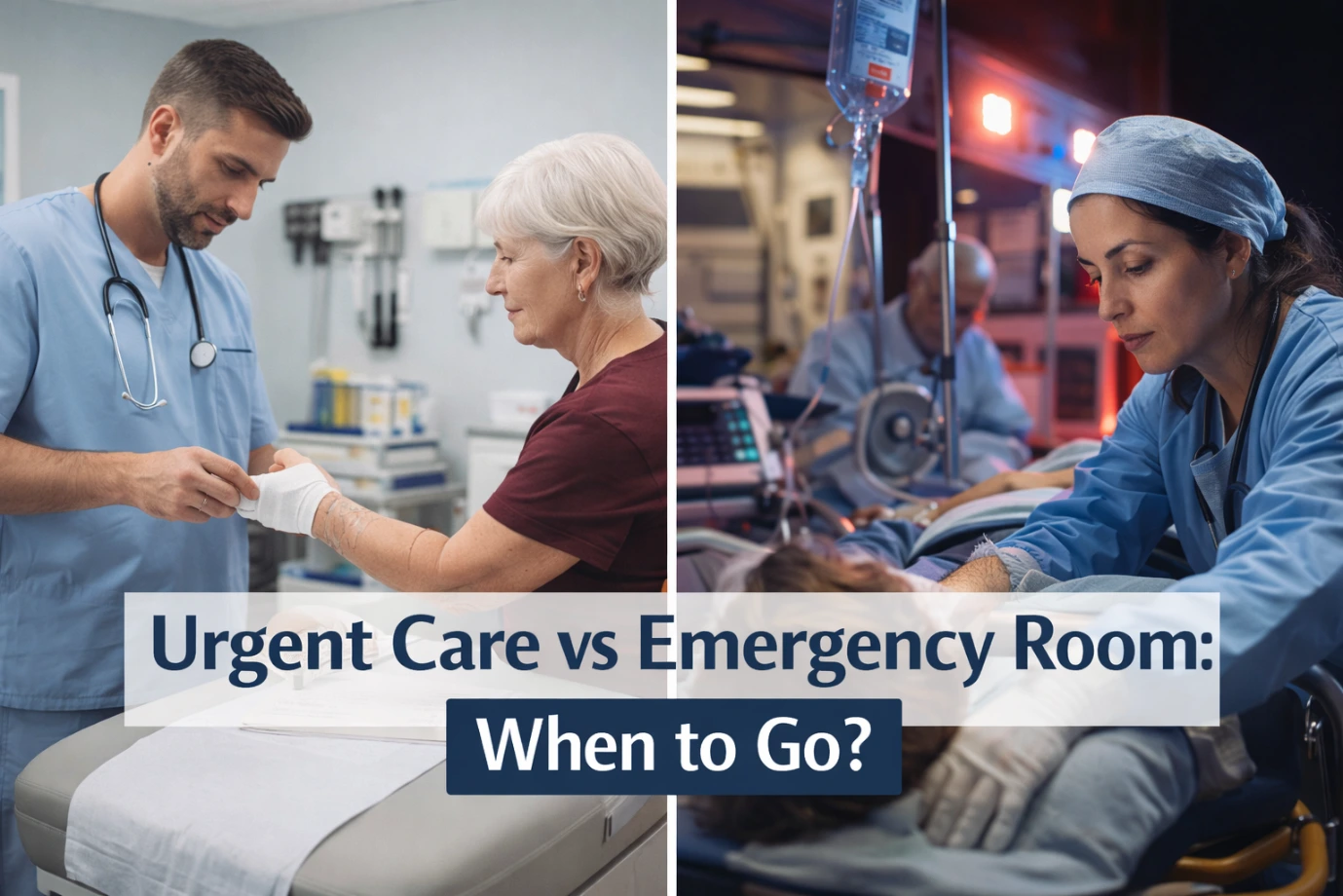
Urgent Care vs. Emergency Room: At a Glance
Use this quick-reference comparison to understand the key differences before reading further.
Best For
Urgent Care: Non-life-threatening, acute conditions. Emergency Room (ER): Life-threatening emergencies.
Average Wait Time
Urgent Care: Under 30 minutes. ER: 2–4+ hours (triage-based).
Average Cost (Without Insurance)
Urgent Care: $150–$300. ER: $1,000+.
Typical Co-pay
Urgent Care: $30–$75. ER: $100+ or a percentage of the bill.
Diagnostic & Imaging Capabilities
Both offer X-rays and basic labs. CT, MRI, and advanced imaging are available only at the ER. Operating room access and the full range of specialist consultations are also ER-only. Urgent care offers limited specialist consultations.
Hours & Convenience
Urgent Care: Extended hours, often 7 days a week, with online check-in often available. ER: Open 24/7, but online check-in is rarely available.
Urgent Care vs. Emergency Room: A Quick Look
Knowing the basic distinctions between urgent care and the ER is the first step toward making the right healthcare decision. One is for serious, life-threatening events, while the other handles immediate but less severe medical needs.
When to Choose Urgent Care (Non-Life-Threatening)
Urgent care centers are perfect for conditions that need attention quickly but aren't life threatening. They bridge the gap between your regular doctor and the emergency room, offering a convenient option when your doctor's office is closed or you can't get an immediate appointment. Common conditions treated include colds, flu, and coughs (read our guide on how to tell the flu from a cold); sore throats and strep throat; minor cuts, scrapes, and burns (see our minor injuries services); sprains and minor fractures (we offer on-site X-rays); urinary tract infections (UTIs); ear infections; mild asthma attacks; non-severe allergic reactions; and rashes or skin infections. These clinics offer a practical solution for immediate health concerns without the high expense or long waits of an emergency room.
When to Choose the Emergency Room (Life-Threatening)
The emergency room is designed for true medical emergencies — conditions that are life-threatening or could cause permanent disability if not treated immediately. ERs are open 24/7 and equipped with advanced diagnostic tools, operating rooms, and specialists. Conditions requiring immediate ER care include chest pain or heart attack symptoms, stroke symptoms (sudden numbness, slurred speech, facial drooping), severe bleeding or deep wounds, major trauma from accidents or falls, difficulty breathing, sudden severe headaches with neurological symptoms, loss of consciousness, severe abdominal pain, poisoning or overdose, and visibly deformed or protruding broken bones. If you suspect a life-threatening emergency, do not hesitate to go to the ER or call 911.
Understanding the Costs: Urgent Care vs. ER on Your Wallet
One of the biggest differences between urgent care and the ER is the cost. An ER visit nearly always costs significantly more, even for similar conditions. Understanding these financial implications can help you make a smarter choice when facing a health issue.
The Price Tag: Why ERs are Significantly More Expensive
Emergency rooms are equipped to handle the most critical situations, which means they have expensive equipment, highly specialized staff, and operate 24/7. These operational costs are reflected in your bill. For example, a sprained ankle treated at urgent care might cost around $150–$200 without insurance — the same condition in an ER could easily be $1,000 or more, not including physician fees. Data shows that an ER visit for a non-emergent condition is often 10 times more expensive than an urgent care visit.
Insurance Coverage: What to Expect
Your health insurance typically covers both urgent care and ER visits, but co-pays and deductibles vary widely. Urgent care co-pays often resemble specialist visits ($30–$75), while ER co-pays can be $100+ or a percentage of the total bill. With high-deductible plans, urgent care chips away at your deductible at a much slower rate than an expensive ER visit. Always check if the urgent care center is in your insurance network to avoid higher out-of-network costs. Medicare and Medicaid typically cover urgent care, often with lower co-pays than ERs — always confirm your specific plan details.
Unexpected Bills: Avoiding Financial Surprises
The surprise medical bill is a common concern. Even with insurance, an ER visit can lead to separate bills from the facility, the ER doctor, radiologists, and other specialists. Urgent care centers typically offer more transparent pricing structures, making it easier to understand your financial obligation upfront. Always ask about costs and accepted insurance before your visit if it's not a life-threatening emergency.
Wait Times & Efficiency: Getting Care When You Need It
When you're not feeling well, waiting for medical attention can be incredibly frustrating. The difference in wait times between urgent care centers and emergency rooms is often significant and a key factor in deciding where to go.
Urgent Care: Designed for Speed
Urgent care centers are built for efficiency. Their primary purpose is to provide quick assessment and treatment for non-life-threatening conditions. The average wait time at an urgent care center is typically under 30 minutes, and many patients are in and out within an hour. The check-in process is straightforward: you'll register, have your vital signs taken, and then see a provider relatively quickly. This efficiency is a major benefit for acute but non-critical conditions like a sudden cough or a minor injury.
Emergency Room: Triage and Priority
Emergency rooms operate on a different principle: triage. Patients with the most critical, life-threatening conditions are always seen first, regardless of when they arrived. This means if you go to the ER with a minor condition, you could wait several hours while doctors attend to more severe cases. Studies show that average ER wait times for non-emergent conditions can easily exceed two to three hours. The triage system ensures that those in dire need receive immediate attention, but it can be a lengthy process for others.
Services & Capabilities: What Can Each Do?
Both urgent care centers and emergency rooms offer essential medical services, but their capabilities and scope of practice differ significantly. Understanding these differences helps you match your health needs to the right facility.
Urgent Care Capabilities
Urgent care clinics handle a wide range of common medical issues. Many centers offer on-site diagnostics including X-rays for potential fractures or sprains, and lab services for conditions like strep throat, flu, UTIs, and blood sugar checks. Providers can treat infections, stitch minor injuries, set simple fractures, administer IV fluids for dehydration, and prescribe medications. They can also perform minor procedures like abscess drainage. Mederi Urgent Care also offers preventive services such as flu shots, tetanus boosters, and school or sports physicals.
Emergency Room Capabilities
Emergency rooms are medical powerhouses, designed to handle any medical emergency with state-of-the-art equipment and specialized personnel. ERs have access to advanced imaging like CT scans, MRIs, and ultrasounds. They can quickly call on a wide array of specialists including cardiologists, neurologists, surgeons, and intensivists. ERs are connected to hospital operating rooms and intensive care units, allowing for immediate surgical intervention or critical care. They are specifically equipped to manage severe trauma — major injuries from accidents, gunshot wounds, or severe burns — providing life-saving interventions. The ER is the only place equipped to provide this level of comprehensive, high-acuity care.
When to Call 911 (Regardless of Cost or Wait)
While choosing between urgent care and the ER is important, there are situations where you should not hesitate to call 911 for immediate emergency services. These are moments when every second counts, and professional medical help needs to reach you as quickly as possible.
You should always call 911 if: someone is unconscious or unresponsive; there is severe bleeding that won't stop; someone is experiencing sudden, severe chest pain, especially radiating to the arm or jaw; symptoms of a stroke appear (sudden weakness or numbness on one side of the body, difficulty speaking, or sudden vision changes); there is significant difficulty breathing or choking; a severe allergic reaction is causing swelling of the face or throat; major head injuries, severe burns, or deep wounds are present; or you suspect poisoning, especially if the person is confused or unconscious.
In these critical scenarios, waiting for transport or attempting to drive yourself could be dangerous. Emergency responders can provide immediate, life-saving care on the way to the hospital.
Your Medical Provider (PCP): The First Line of Defense
While urgent care and the ER address immediate needs, your regular physician (PCP) remains the cornerstone of your long-term health. A PCP offers continuous, comprehensive care, focusing on prevention, managing chronic conditions, and coordinating specialist referrals. They know your medical history best.
When possible, contacting your PCP should be your first step for routine check-ups, ongoing health concerns, and managing chronic diseases. They can often provide same-day or next-day appointments for less urgent issues. Your PCP also plays a vital role in follow-up care after an urgent care or ER visit, ensuring continuity and proper recovery.
Urgent care centers complement your PCP by handling those unexpected, non-life-threatening issues that arise when your doctor isn't available. They are not meant to replace your PCP, but rather to provide an accessible option for acute problems.
Mederi Urgent Care: Your Trusted Local Option
At Mederi Urgent Care, we understand that navigating healthcare decisions can be challenging, especially when you or a loved one isn't feeling well. We are committed to providing affordable, efficient, and high-quality urgent care services for all your non-life-threatening medical needs. Our experienced team is here to offer prompt, compassionate care, ensuring you get the right treatment without the long waits or high costs associated with an emergency room.
We offer a wide range of services, including treatment for colds and flu, minor injuries like sprains and cuts, diagnostic X-rays, lab testing, and physicals. We also provide pediatric services for your little ones. Our goal is to make healthcare convenient and accessible for our community.
Choosing Mederi Urgent Care means choosing a faster, more cost-effective path to recovery for conditions that need immediate attention but are not critical. Find us in Glendale, Hollywood, and Los Feliz, CA, or use our easy online check-in system to save time.
Conclusion: Empowering Your Healthcare Decisions
Knowing when to choose urgent care versus the emergency room is a vital skill for managing your health and finances. Remember, urgent care is your best option for immediate, non-life-threatening conditions, offering quicker service and lower costs. The emergency room is reserved for true medical emergencies that pose a risk to life or limb.
By making informed decisions, you can ensure you receive the most appropriate and efficient medical care. Don't hesitate to seek timely medical attention when you need it. For those urgent but not life-threatening concerns, Mederi Urgent Care is ready to provide you with expert, convenient care.
Frequently Asked Questions
How can I tell if my symptoms warrant an ER visit or if urgent care is sufficient to avoid high costs?
Determining the right place depends on symptom severity. If your symptoms are sudden, severe, or life-threatening — like chest pain, difficulty breathing, or signs of a stroke — go to the ER. For less severe but urgent issues such as colds, flu, minor cuts, or sprains, urgent care is appropriate. Choosing urgent care for non-emergencies significantly reduces costs compared to an ER visit.
My child has a high fever but seems okay otherwise. Should I go to urgent care, or do I need to rush to the ER and face long waits?
For a child with a high fever who is otherwise alert, responsive, and drinking fluids, an urgent care visit is usually sufficient. An ER visit would be warranted if the child also has difficulty breathing, is lethargic, has a stiff neck, or shows signs of severe dehydration. Our pediatric services team can provide quick assessment, diagnosis, and treatment for fevers without the extended ER wait times.
I don't have a regular doctor. Can urgent care serve as my main point of contact for ongoing health issues, or is it just for emergencies?
Urgent care centers are designed for acute, episodic care, not for ongoing health management. While they can treat a current illness or injury, they do not replace the comprehensive and continuous care provided by a regular physician. We recommend establishing a relationship with a PCP for preventative care, chronic condition management, and referrals to specialists.
Will my health insurance cover urgent care, and is it a better financial option if I have a high-deductible plan?
Most health insurance plans, including those with high deductibles, cover urgent care visits. Typically, the co-pay for urgent care is much lower than for an ER visit, and the overall cost contributes to your deductible at a more manageable rate. For individuals with high-deductible plans, choosing urgent care for non-emergencies is almost always the more financially sensible option.
I'm experiencing a persistent cough. I want to get it checked out quickly without spending hours in a waiting room. What's the fastest and most efficient option?
For a persistent cough or similar mild symptoms, an urgent care center is the fastest and most efficient option. Urgent care clinics are specifically designed for quick assessment and treatment of non-life-threatening conditions, often with minimal wait times. You can typically walk in and be seen by a provider much sooner than you would in an emergency room, which prioritizes critical cases. Visit Mederi Urgent Care today — no appointment needed.

You Might Also Enjoy...

Primary Care vs Urgent Care: Differences, When to Visit Each, Cost Comparison & How They Work Together
Not sure whether to visit primary care or urgent care? Compare costs, services, when to choose each, and how they complement your healthcare at Mederi Urgent Care LA.

Allergy Symptoms & Treatment: Seasonal, Food & Skin Allergies, Testing, Medications & When to Get Help
Dealing with allergy symptoms? Learn about seasonal, food, and skin allergies, available testing, medications, and when to seek same-day treatment at Mederi Urgent Care LA.